
Torsion vs. Extension Springs: What's Actually Different (and Why It Matters)
Torsion and extension springs store the same energy in completely different ways, and the difference shows up in safety, lifespan, and cost. Here's how to tell them apart and why it matters.
How Torsion Springs Actually Work
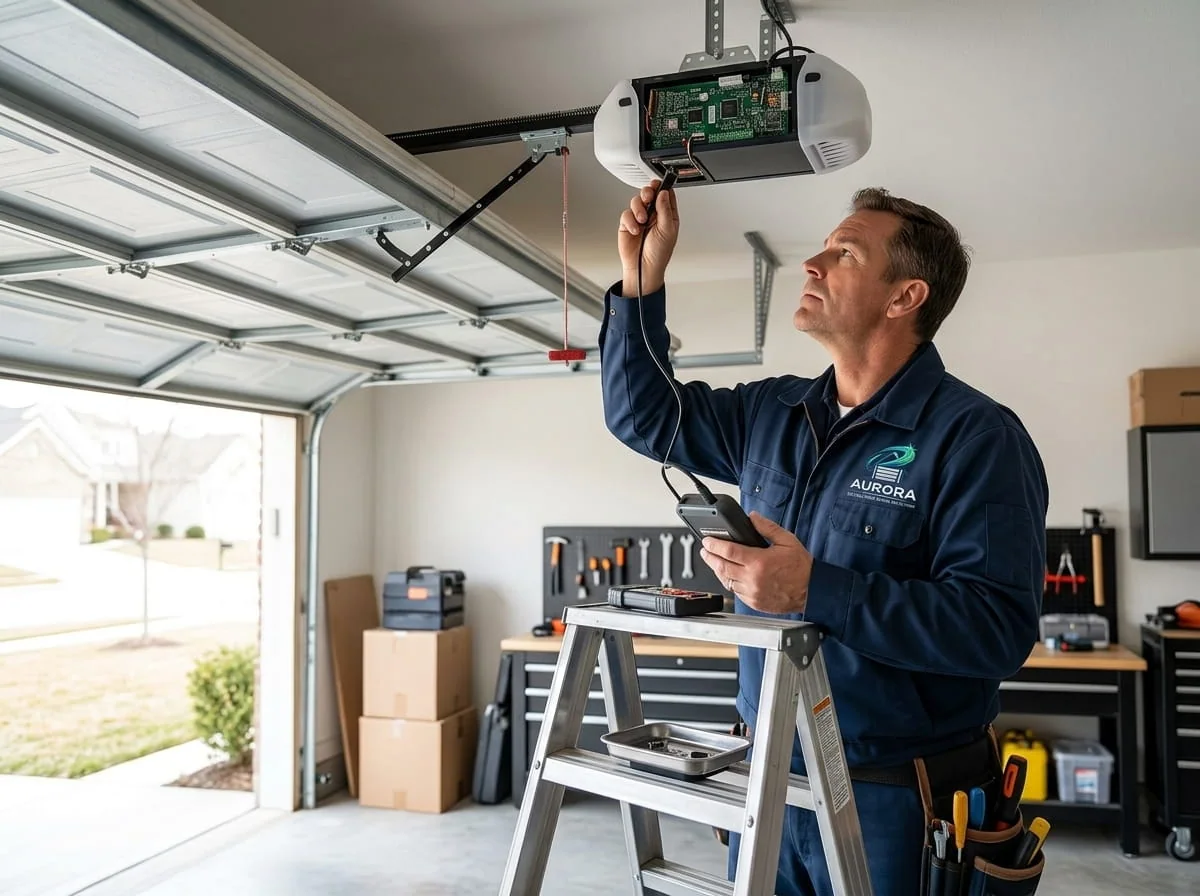
A torsion spring system mounts on a metal shaft directly above the closed door, usually centered over the opening, sometimes as a pair of shorter springs side by side. The spring itself is a tightly wound coil under constant rotational stress. When the door closes, a cable drum at each end of the shaft winds cable that runs down to the bottom bracket of the door, and that winding motion twists the spring tighter, storing mechanical energy the same way a wound clock spring stores it.
When the door opens, the spring unwinds and that stored torque turns the shaft, which turns the cable drums, which lifts the door through the cables. The heavier the door, the more turns of tension the spring needs to hold, which is why torsion springs are sized by wire gauge, coil diameter, and length to match a specific door weight almost exactly. A spring sized for a 16-foot double door won't behave safely on a lighter single door, and vice versa — this is one reason spring sizing isn't something to eyeball.
Because the shaft and springs sit above the door on a stationary steel bracket, the entire torsion assembly stays fixed in place whether the door is open or closed. Nothing about the spring itself travels along the tracks. That fixed, contained geometry turns out to matter a lot for what happens when a spring eventually fails, which we'll get to below.
How Extension Springs Actually Work
Extension springs take a different approach entirely. Instead of one or two springs mounted centrally above the door, extension springs run in pairs along the horizontal tracks near the ceiling, one on each side of the door. Rather than twisting, they stretch — the springs extend and contract in length as the door moves, pulling against pulleys and a cable-and-pulley system that translates that stretching motion into lift.
When the door closes, the springs stretch out under tension, storing energy the way a stretched rubber band does. When the door opens, the springs contract back toward their resting length, and that contraction pulls the door upward through the pulley system. Because each side operates somewhat independently, extension spring systems rely on both springs staying properly matched in tension — if one is noticeably weaker than the other, the door can rack or bind as it travels.
Extension spring systems were the standard on a lot of residential garages built through the 1970s and 80s, and plenty of older homes in established Aurora neighborhoods still have the original setup. They're mechanically simpler in some ways and were historically cheaper to manufacture, which is part of why they were so common for so long.
Why Torsion Systems Dominate on Modern Doors
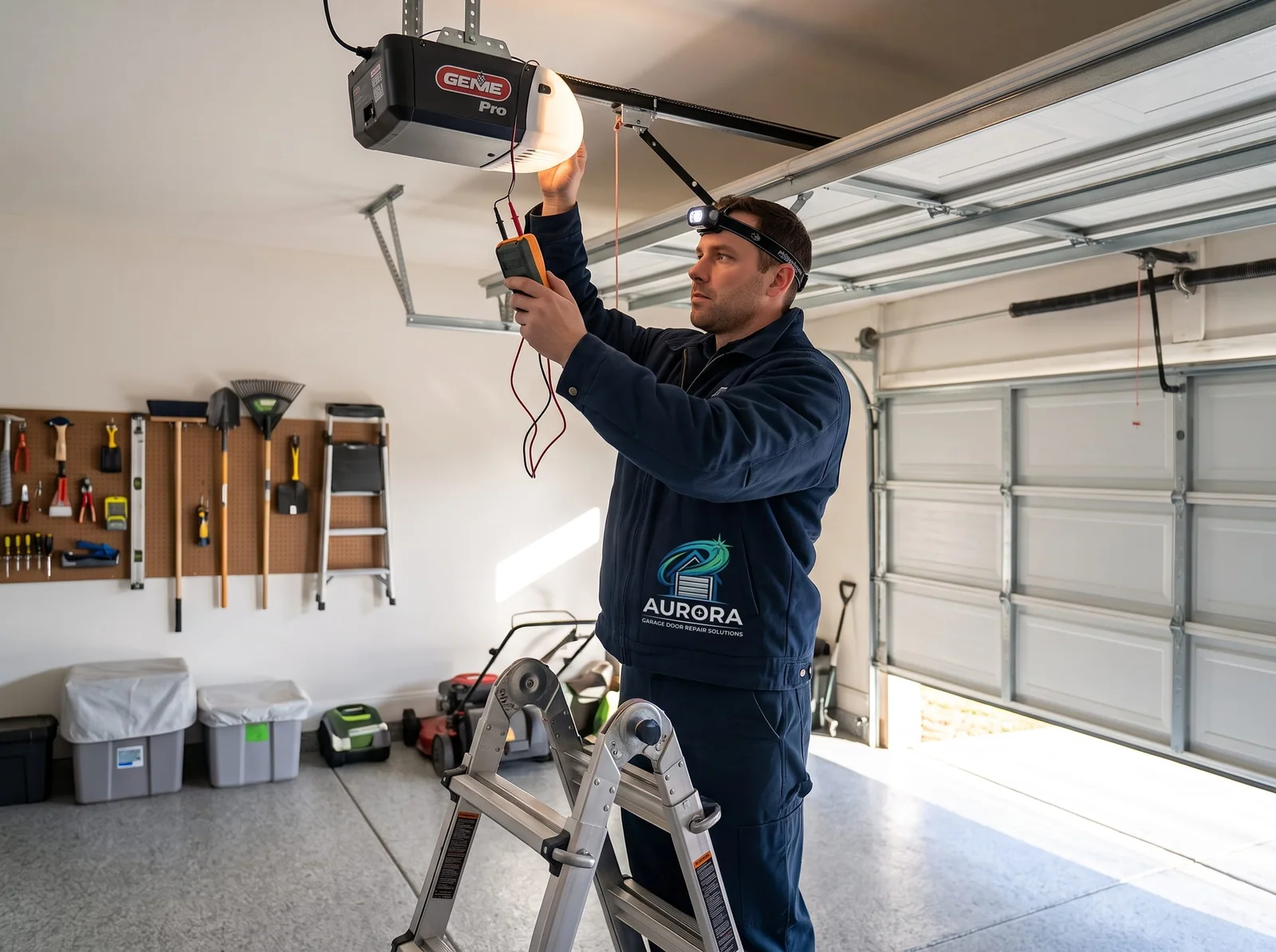
Walk through most new-construction subdivisions or any recently replaced door in the Fox Valley area and you'll almost always find a torsion system overhead. That's not a coincidence or a fad — it reflects real mechanical advantages that manufacturers and installers have settled on over the past few decades.
Torsion springs handle heavier doors more predictably. Because the spring's torque is precisely matched to door weight and distributed evenly across a single shaft, the door tends to move more smoothly and stay better balanced across its full range of travel. Insulated doors, doors with heavier hardware, and oversized doors for wider openings all benefit from that predictability. Extension spring systems can be engineered for heavier doors too, but it typically takes more springs or more careful tuning to get the same balance.
Torsion systems are also generally considered to have a better overall safety profile, particularly when paired with proper safety cables running through the springs. Because the assembly is centrally mounted and contained by the shaft and end brackets, a failure tends to stay more controlled. That's a meaningful factor for a component that's under constant, significant mechanical tension every time the door sits closed.
None of this means extension springs are inherently unsafe when installed and maintained correctly. Plenty of older Aurora homes run extension systems for years without incident. But when homeowners ask which system is 'better' for a new door or a full replacement, torsion is the answer installers reach for first, and it's worth understanding why before you approve any door or opener project.
The Safety Gap Nobody Talks About: Missing Containment Cables
Here's the safety detail that matters most and gets skipped over most often. Extension springs stretch under real tension — enough tension that if the spring itself snaps or a mounting hook lets go, the broken piece can release that stored energy suddenly. Without a safety cable threaded through the spring's coils and anchored independently, that broken spring or hook has nowhere to go but wherever the released tension sends it.
The Consumer Product Safety Commission has published general safety guidance on garage door springs for exactly this reason, and the core recommendation is consistent across the industry: extension spring systems should always have a separate safety cable running through the center of each spring, secured at both ends independently of the spring's own mounting hardware. That cable does one job — if the spring or its hardware fails, the cable keeps the broken pieces contained near the track instead of letting them travel.
The problem is that a lot of older extension spring installations, especially ones that predate current safety guidance or that have had springs replaced piecemeal over the years, are missing those containment cables entirely. A homeowner can't always tell just by glancing up at the tracks whether a safety cable is actually threaded through the spring or just routed nearby.
- If your garage has extension springs along the tracks and you're not sure whether safety cables are installed, that's worth having a technician confirm — it's a quick visual check for someone trained to look for it.
- Safety cables are inexpensive relative to the spring itself, and retrofitting them onto an existing extension system is usually straightforward.
- This is squarely a case where the fix belongs to a trained technician rather than a DIY project, given the stored tension involved in both the spring and the retrofit work itself.
Torsion systems carry their own version of this same principle. A torsion spring under full tension is genuinely dangerous to work on without the right winding bars and clamping technique, which is exactly the kind of job Ryan Delaney has built his approach around since starting the company back in 2009 — he got into this trade after watching a neighbor's spring snap and nearly cause a serious injury, and it's shaped how carefully his crew treats every spring job since.
Cycle Life: What the Numbers Mean in Real Life
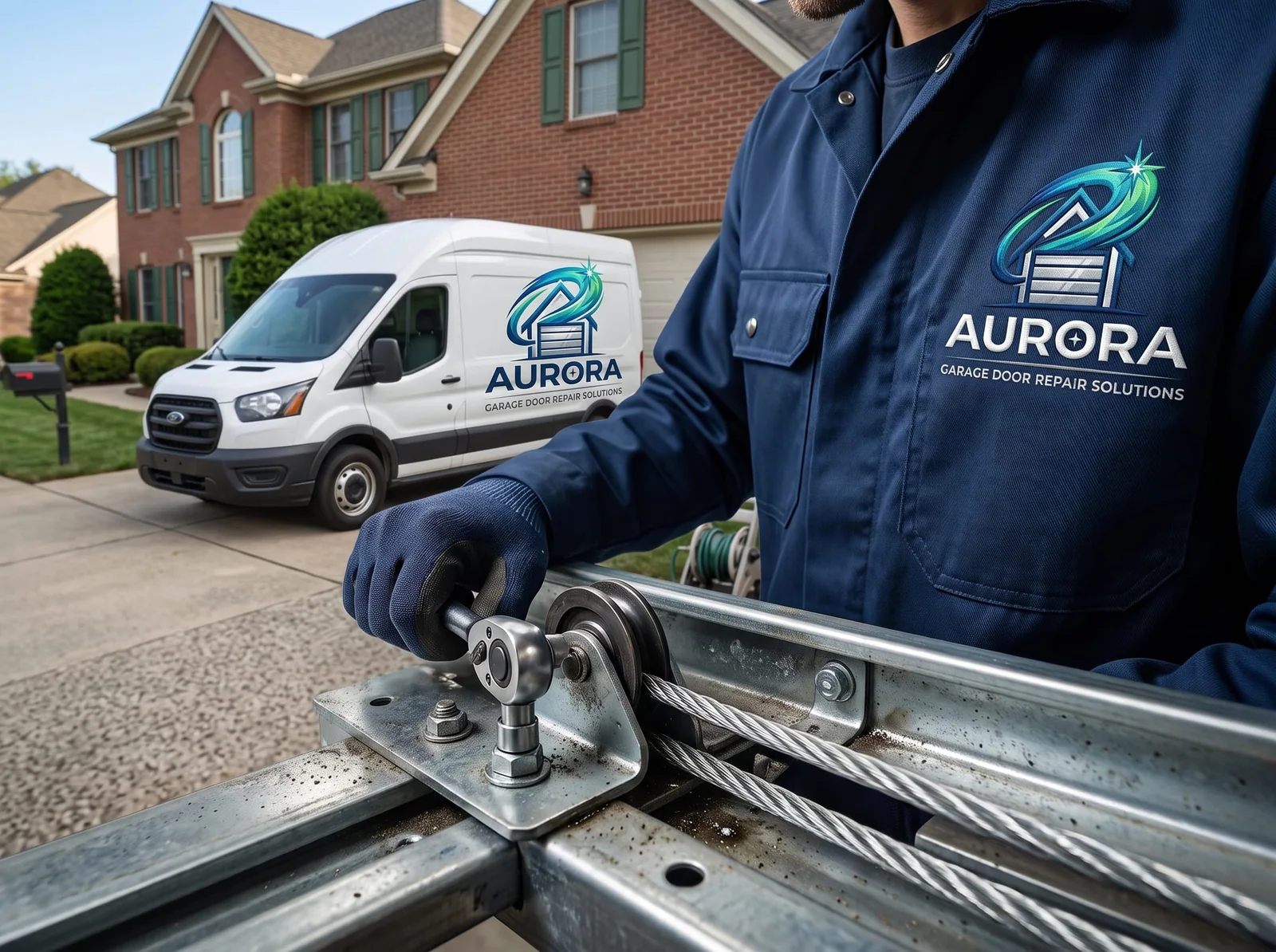
Springs are rated in cycles, with one cycle counted as a full open-and-close of the door. The garage door industry references standards published by DASMA, including ANSI/DASMA 102 and TDS-190, which cover spring cycle life testing and classification. In practical terms, standard-duty springs are commonly rated around 10,000 cycles, while high-cycle springs are rated well beyond that — the exact figures vary by manufacturer and spring size, so it's worth confirming with whoever installs or replaces yours rather than assuming a number.
What actually matters to a homeowner is what a cycle count means day to day. A household that opens the garage door twice a day — once leaving for work, once coming home — puts roughly 700 to 750 cycles a year on the springs. At that pace, a standard 10,000-cycle spring lasts somewhere around 12 to 15 years under normal conditions. A household with a home business, multiple drivers, teenagers, or a detached garage used constantly for storage access will burn through cycles considerably faster.
Torsion and extension springs both degrade the same general way: metal fatigue accumulates with every twist or stretch cycle, and the spring's ability to hold tension gradually declines even before it fails outright. Aurora's winter swings add a real variable here — cold temperatures make spring steel more brittle and less forgiving, and a spring near the end of its cycle life is more likely to fail during a cold snap than during a mild stretch of weather. That's part of why so many spring failures in this area cluster in January and February rather than spreading evenly across the year.
In practice, cycle life is less about counting exact numbers and more about recognizing that springs are a wear item with a finite, predictable lifespan — not something that should fail as a total surprise if it's been in service well over a decade.
Torsion vs. Extension at a Glance
Here's a side-by-side summary of the practical differences covered above.
| Factor | Torsion Springs | Extension Springs |
|---|---|---|
| Mounting location | Horizontal shaft directly above the closed door | Along the horizontal tracks, one spring per side |
| How energy is stored | Twisting/torque along a coiled spring | Stretching/tension along the spring's length |
| Typical era installed | Standard on most doors built or replaced in recent decades | Common on older homes, especially pre-1990s construction |
| Handling heavier doors | Generally more predictable balance on heavier and insulated doors | Workable, but often needs more careful tuning for heavier doors |
| Safety profile | Considered stronger, especially with proper safety cables installed | Requires separate containment/safety cables to control a broken spring |
| Visual identification | Look for a coiled spring on a shaft above the closed door | Look for long stretched springs running along the ceiling tracks |
| Typical cycle life | Standard-duty and high-cycle options widely available | Standard-duty and high-cycle options widely available |
Both systems can be installed, maintained, and repaired safely by a qualified technician. The table above reflects general tendencies, not a verdict that one system is unsafe — it's a starting point for understanding what you're looking at above your own garage door.
How to Tell Which System Your Garage Has
You don't need any tools or technical training to identify which spring system you have — just look up, from a safe distance, with the door closed.
If you see a single long spring, or occasionally two shorter springs, mounted on a metal shaft that runs horizontally across the width of the door directly above the opening, you have a torsion system. The shaft usually has a drum at each end where cable winds around it, and the whole assembly sits on a stationary bracket that doesn't move as the door opens and closes.
If instead you see a pair of long springs running front-to-back along the horizontal tracks near the ceiling, one on each side of the door, stretching and contracting as the door moves, that's an extension system. Look closely at whether a thinner cable runs through the center of each spring from end to end — that's the safety cable, and its presence (or absence) is worth noting even if you're not the one deciding what to do about it.
A few other visual cues can help if the springs themselves are hard to see clearly:
- Torsion systems typically have a single centered mounting bracket and a noticeably heavier-duty shaft assembly.
- Extension systems have visible pulleys near the back of the horizontal tracks, since the pulley-and-cable arrangement is what translates the spring's stretch into lift.
- Newer doors, insulated doors, and anything installed in the last fifteen to twenty years are far more likely to be torsion, simply based on what's been standard in new installations.
What we'd stop short of recommending is doing anything beyond looking. Both spring types store meaningful mechanical energy even when the door looks perfectly still, and adjusting, tightening, or replacing either one is a job that calls for the right bars, clamps, and experience — not a ladder and a Saturday afternoon. If you're not sure what you're looking at, a photo sent to a technician is usually enough for them to identify the system before they even arrive.
What This Means If You're Replacing Springs or a Door
If you're just replacing a broken spring on an existing door, the practical answer is usually to match what's already there — converting an extension system to torsion mid-repair is possible but it's a bigger job involving new brackets, a shaft, and drums, not a simple swap, and it only makes sense as part of a broader plan rather than an emergency fix.
If you're replacing the entire door, that's the natural point to reconsider the spring system as part of the larger decision, especially if you're upgrading to a heavier insulated door or a wider opening. It's also worth asking directly whether safety cables are included and properly installed if an extension system stays in place, and whether the new springs are rated for the specific weight and cycle expectations of your household's daily use.
Either way, this isn't a decision to make from a spec sheet alone. A technician who actually measures your door, weighs the realistic daily cycle count for your household, and accounts for how an unheated or older garage in this climate treats spring steel over a Illinois winter is going to give you a more useful answer than any general rule of thumb, including the ones in this article.

Ryan Delaney
Owner and lead technician at Aurora Garage Door Repair Solutions, serving Aurora, IL since 2009.
FAQs
Is it dangerous to have extension springs without safety cables?
It's a real risk worth addressing rather than ignoring. Extension springs store meaningful tension, and without a separate containment cable threaded through the coil, a broken spring or failed hook has nothing keeping it from traveling when it lets go. The CPSC's general safety guidance recommends safety cables on every extension spring system for this reason. If you're not sure whether yours has them, it's worth having a technician confirm during a routine visit rather than waiting for something to fail.
Can I convert my extension springs to a torsion system?
Yes, mechanically it's possible, but it's a bigger project than a spring swap — it involves adding a shaft, mounting brackets, and cable drums above the door, not just replacing the springs themselves. Most homeowners consider this when they're already replacing the door or doing a larger upgrade, since converting a functioning extension system on its own usually isn't worth the cost unless there's another reason to do it.
How long do torsion springs last compared to extension springs?
Both types are typically rated for a similar range of cycles by manufacturers, often around 10,000 cycles for standard-duty springs with higher-cycle options available. In practice, actual lifespan comes down to how many times a day the door opens and closes and how the springs have been maintained, more than which type is installed. A typical two-cycle-a-day household can expect a standard spring, torsion or extension, to last over a decade.
Which type is more expensive to replace, torsion or extension?
Cost depends on spring size, door weight, and whether hardware like cables, drums, or pulleys need replacing at the same time, so we won't put a number on it here — every door is different. What we can say honestly is that Aurora Garage Door Repair Solutions provides a free, upfront quote before any work begins, so you know exactly what's involved before committing.
Can I tell which spring system I have without opening the garage door?
Yes. With the door closed, look up at what's directly above the opening. A coiled spring on a horizontal shaft centered above the door means torsion. Long springs stretched out along the tracks near the ceiling, one on each side, mean extension. You can identify the system just by looking — no need to touch anything.
Why do most new garage doors use torsion springs instead of extension springs?
Torsion systems generally handle heavier and insulated doors with more consistent balance, and they're widely considered to have a stronger overall safety profile, especially when paired with proper safety cables. That combination is why torsion has become the standard choice for new installations and full door replacements over the past few decades, even though extension systems remain common on older homes.
Have a Garage Door Problem Right Now?
Skip the guesswork — call Aurora Garage Door Repair Solutions for a fast, honest diagnosis.