
Broken Spring Repair in Aurora, IL
A broken spring means your garage door can't move safely. Our technicians replace torsion and extension springs correctly, without the injury risk of a DIY attempt.
- Locally owned since 2009
- Insured, background-checked techs
- Free upfront quotes
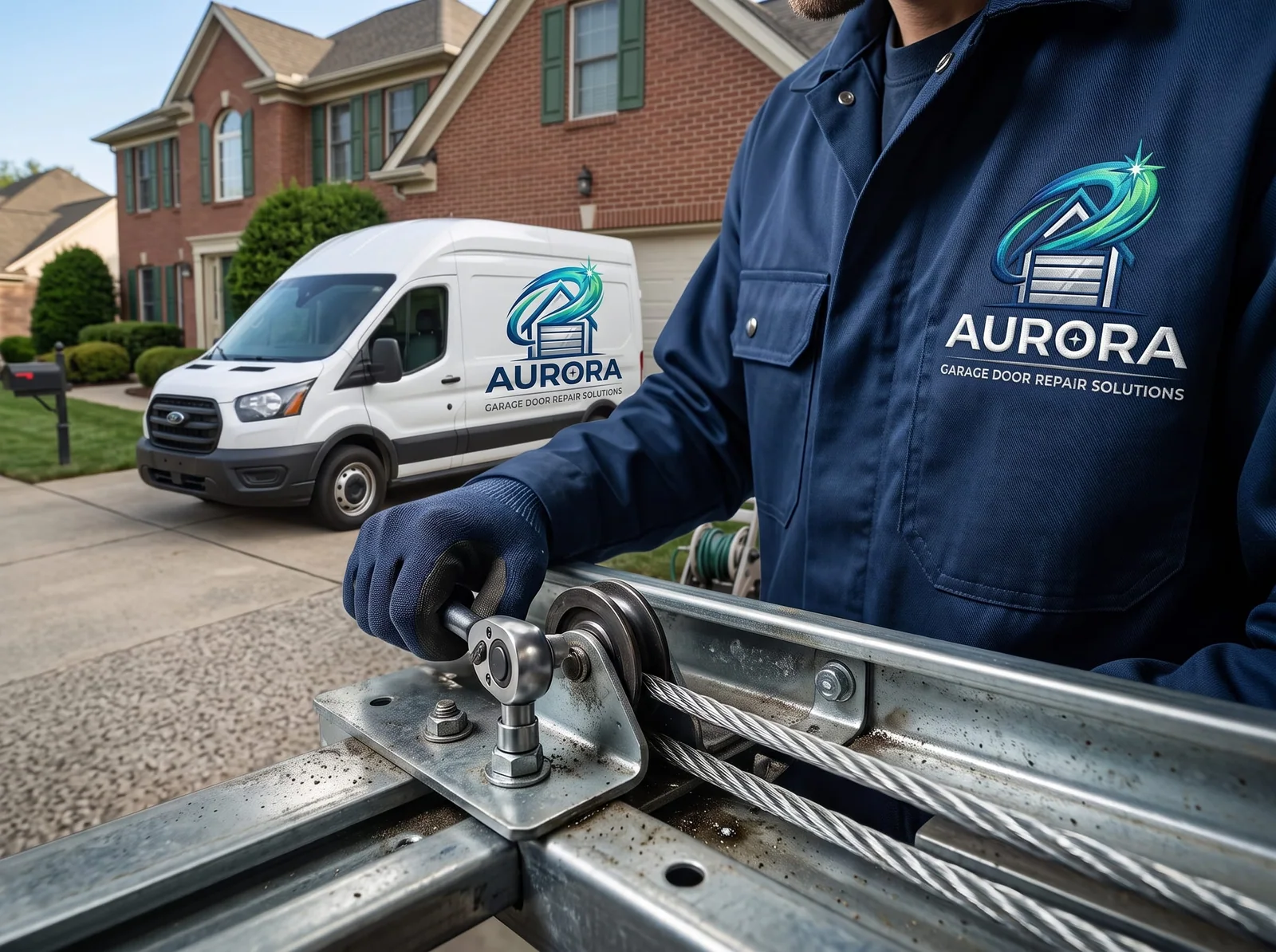
A garage door that won't budge, or one that slams down hard instead of easing shut, usually means a spring has given out. Most doors in Aurora run on one or two torsion springs mounted on a shaft above the opening, though some older doors use a pair of extension springs stretched along the horizontal tracks. Either way, that spring carries nearly all the weight of the door. A broken one leaves the opener straining against hundreds of pounds it was never built to lift alone, and it can put anyone standing nearby at risk if the door drops.
Springs fail for predictable reasons. They're rated for a set number of open-and-close cycles under industry standards tracked by DASMA, and once a spring nears the end of that life, or has been weakened by rust, cold temperatures, or was the wrong size for the door's weight to begin with, it can let go without warning.
Aurora Garage Door Repair Solutions replaces broken torsion and extension springs throughout Aurora and the surrounding Fox Valley communities, matching wire gauge, coil diameter, and wind direction to the original spring so the door balances correctly again rather than just limping along.
Signs of a Broken or Failing Garage Door Spring
A fully broken spring is usually obvious. The door won't move, or the opener runs but the door barely lifts off the ground before stalling. A loud bang from the garage, often described as sounding like a gunshot, is a classic sign of a torsion spring snapping under tension. Other signs show up before a full break:
- The door feels unusually heavy when lifted by hand with the opener disconnected.
- The door opens a few inches, then reverses, or the opener clicks and strains without lifting it.
- One side of the door looks higher than the other while opening, which often means one of two torsion springs has broken while the other is still intact.
- You can see a visible gap in the coiled spring above the door, where the wire has separated.
- The door closes fast and slams instead of lowering smoothly, which can point to a failing extension spring.
Any of these is a reason to stop using the door and call for an inspection rather than keep cycling it, since forcing a door with a compromised spring accelerates wear on the opener, cables, and tracks.
Torsion Springs vs. Extension Springs
Most garage doors built in the last few decades use torsion springs, one or two heavy coiled springs mounted on a metal shaft directly above the door opening. As the door closes, the shaft winds the spring tighter, storing energy that unwinds to help lift the door on the next opening. Torsion systems are more common today because they put less strain on the door's tracks and tend to last longer.
Older doors and some lower-cost installations use extension springs instead, mounted along the horizontal tracks on each side of the door, above the rollers. These springs stretch as the door closes and pull back to help lift it. Because an extension spring is under tension along its full length rather than contained around a shaft, safety guidance from the Consumer Product Safety Commission calls for a separate safety cable running through the spring's center, so it can't travel across the garage if the spring itself fails.
Knowing which system your door has matters for a repair, since the parts, the failure signs, and the safety precautions are different for each.
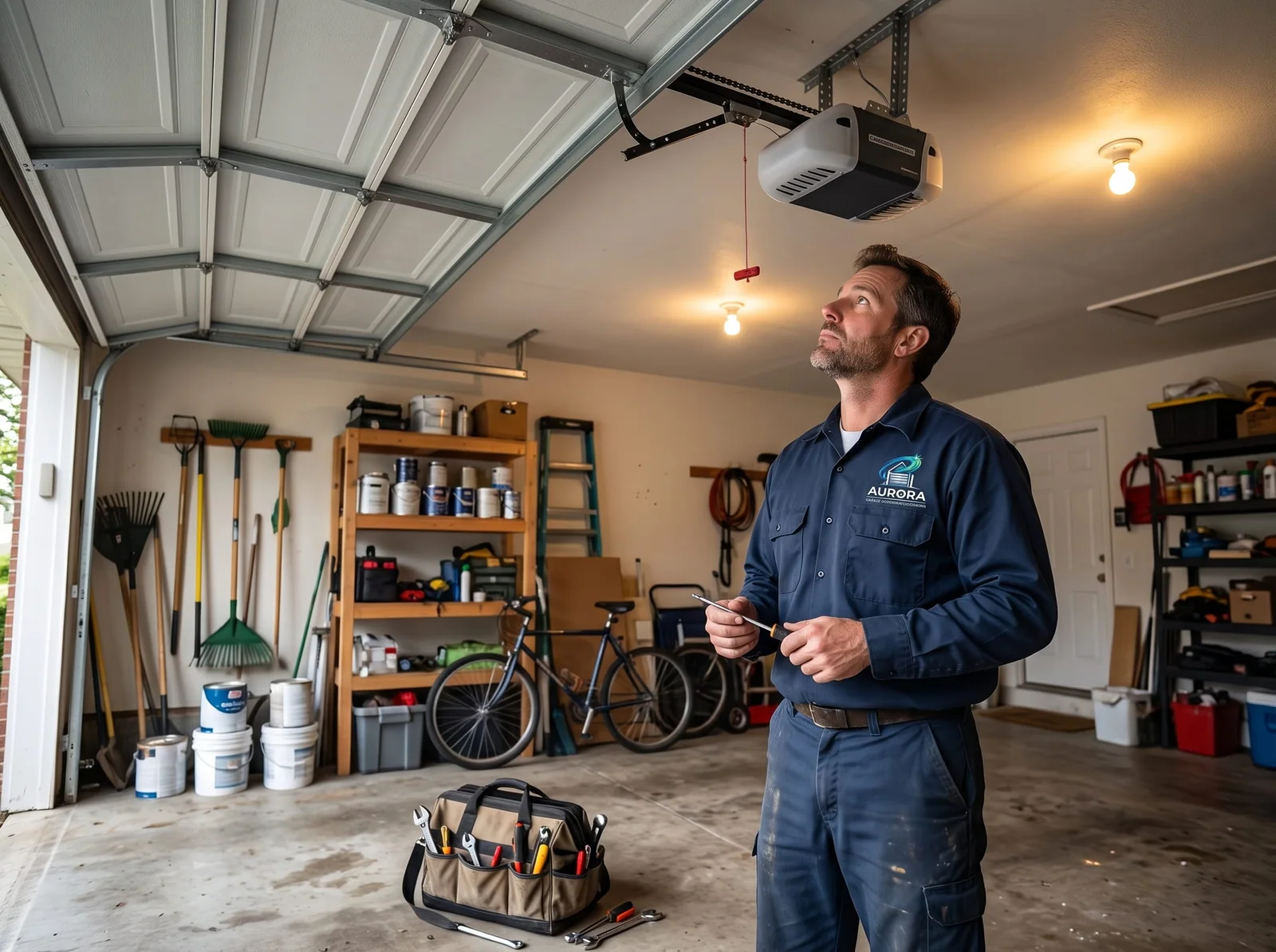
Why Garage Door Springs Break
Springs are wear parts, not permanent hardware, and several factors determine how long one lasts:
- Cycle life. Every torsion or extension spring is engineered for a rated number of open-and-close cycles, a standard DASMA documents under ANSI/DASMA 102 and TDS-190. A door opened several times a day reaches the end of that rated life faster than one used occasionally.
- Rust and moisture. Corrosion on the coil wire eats into the metal's strength, and a rusted spring can fail well short of its rated cycle count. Garages with poor ventilation or a lot of road salt tracked in during winter see this more often.
- Cold temperatures. Steel contracts and stiffens in cold weather, which changes the tension in a wound torsion spring and makes it more brittle right when it's under the most load. This is why spring failures tend to spike during Aurora's coldest stretches.
- Wrong spring size. A spring sized for a lighter door, or installed as a stopgap fix, gets overworked every time it lifts a door heavier than it was rated for, shortening its life considerably.
Why Aurora Winters Are Hard on Garage Door Springs
Aurora's winters bring January highs around 30°F and lows near 16°F, with roughly 8 inches of average monthly snowfall, cold enough and often enough to matter for the metal in your garage door. Steel contracts as temperatures drop, and a torsion spring wound to the correct tension in October can behave differently on a 10-degree morning in January. The coils sit tighter, the metal is less forgiving, and a spring already near the end of its cycle life or weakened by rust is far more likely to snap on that first hard cold snap than during a mild stretch.
Cold weather affects more than the spring itself. Track brackets and hardware contract too, nylon rollers get brittle and can crack, and thickened lubricant inside the opener makes the motor work harder, which puts more strain on a spring that's already compromised. Freeze-thaw cycles can also shift a concrete slab slightly over time, throwing off track alignment and adding uneven load to the springs.
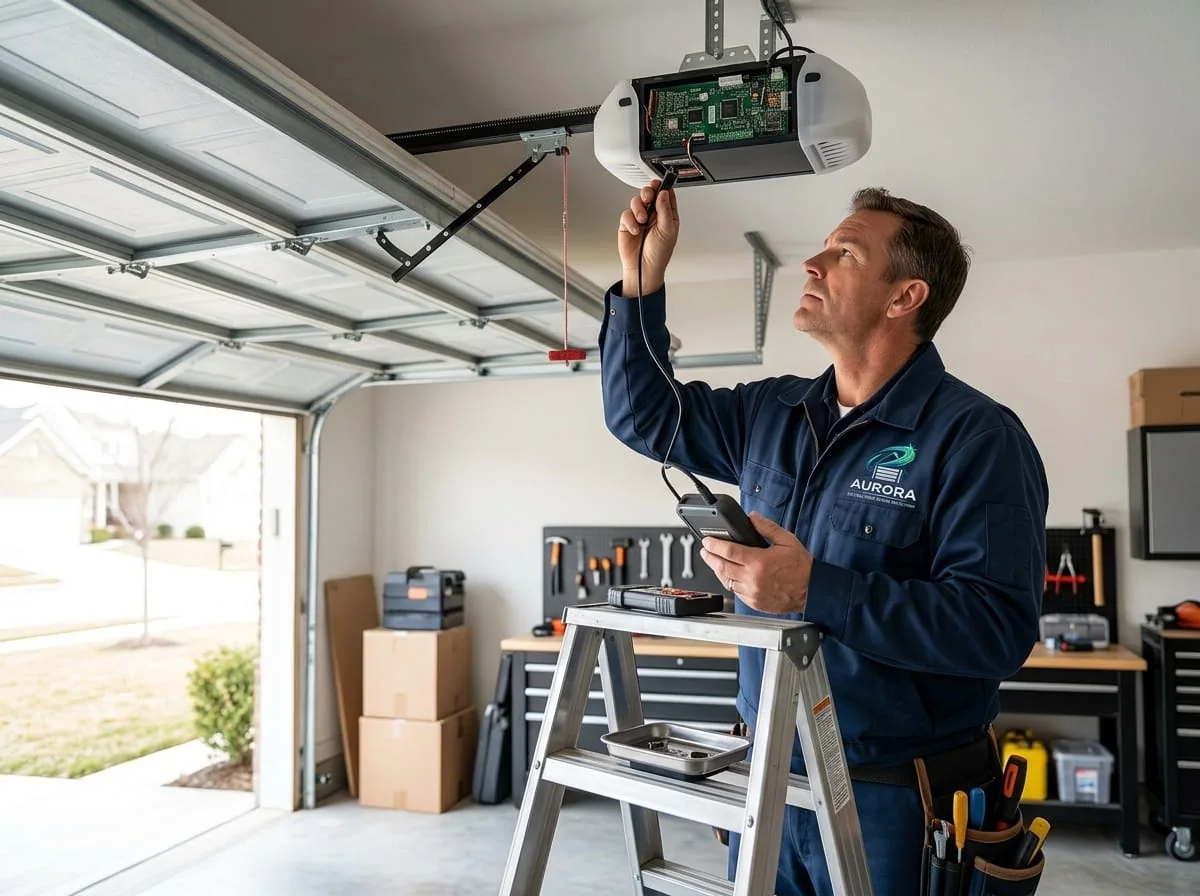
Why Broken Spring Repair Is Not a DIY Job
A wound torsion spring stores a serious amount of mechanical energy, enough that the Consumer Product Safety Commission and door manufacturers both treat spring work as one of the more hazardous jobs around a home. When a spring is released in a controlled way, that energy safely lifts a door weighing hundreds of pounds. When it's released in an uncontrolled way, by a slipped winding bar or the wrong tool, that same energy has nowhere to go but into whatever is closest to the spring: hands, arms, or a face.
Extension springs carry their own risk. Without a properly installed safety cable, a failing extension spring can release suddenly and travel across the garage. Replacing either type correctly requires winding bars sized to the spring, a way to safely secure the door while it's unbalanced, and knowing the door's spring specifications well enough to match wire gauge and wind direction. Get any of that wrong and the door will be out of balance even after the new spring goes in.
This is part of why Ryan Delaney, our owner, focuses so much on doing spring work correctly. He got into this trade after helping a neighbor whose spring snapped and nearly caused a serious injury, and that experience still shapes how our technicians approach every spring job.
Why Aurora Homeowners Choose Aurora Garage Door Repair Solutions
We've been replacing garage door springs in Aurora since 2009, and spring work is where a lot of that experience shows. Our technicians are insured and background-checked, and we give upfront, honest pricing before any work starts, so there's no guessing what the final bill will look like.
We carry a range of torsion and extension spring sizes so most repairs are completed in a single visit, and we check the whole system, cables, pulleys, rollers, and door balance, while we're already there, since a spring rarely fails in isolation. Same-day appointments are available where possible, and we return after-hours calls first thing the next business day.
What to Expect When You Call
Phone Diagnosis and Scheduling
We ask a few questions about the sound, symptoms, and door type so the technician arrives with the right spring on the truck.
On-Site Inspection
The technician confirms the spring type, size, and wind direction, and checks cables, pulleys, and rollers for related wear.
Spring Removal and Replacement
Using properly sized winding bars, the old spring or spring pair is safely unwound and replaced with a correctly matched spring.
Balance and Safety Check
The door is tested for even balance and correct auto-reverse function before the technician leaves.
Walkthrough
We explain what was replaced and answer questions before wrapping up the appointment.
Broken Spring Repair in Aurora, IL FAQs
Can I replace a garage door spring myself?
It's not something we recommend. A wound torsion spring stores enough energy to cause a serious injury if it releases uncontrolled, and the Consumer Product Safety Commission treats spring replacement as one of the more hazardous home repair jobs for that reason. It also requires spring-specific tools and knowing the exact spring specifications for your door.
How do I know if I have torsion springs or extension springs?
Torsion springs are the single or paired coiled springs mounted on a shaft directly above the door opening. Extension springs run along the horizontal tracks above the rollers on each side of the door and stretch as the door closes.
How long does a broken spring repair take?
Most broken spring replacements are completed in a single visit, though the exact time depends on whether one or both springs need replacing and whether cables or rollers need attention too.
How much does it cost to fix a broken garage door spring?
Cost depends on the spring type and size, whether one or both springs need replacing, and the condition of related hardware like cables and pulleys. We provide a free, upfront quote before any work begins so there are no surprises.
Why did my garage door spring break in cold weather?
Cold temperatures make steel contract and become more brittle, which changes the tension in a wound spring and makes it more likely to snap under load. Springs already near the end of their cycle life or weakened by rust are especially vulnerable during Aurora's coldest stretches.
Is it safe to open my garage door by hand if the spring is broken?
It can be done carefully, but the door will feel extremely heavy and can drop suddenly if it's not supported properly. It's safer to leave the door closed and call for a repair rather than force it open.
If one spring is broken, do I need to replace both?
When a door has two torsion springs, we generally recommend replacing both, since they're the same age and have gone through the same number of cycles, so the second one is usually close behind. We'll walk you through the specifics for your door before we do anything.
Need Broken Spring Repair in Aurora, IL?
Aurora Garage Door Repair Solutions is ready to help — call now for a free, upfront quote.