
Garage Door Repair in Aurora, IL
From a spring that snaps on a freezing January morning to a door that just won't close right, our technicians diagnose the real problem and fix it in one visit whenever possible.
- Locally owned since 2009
- Insured, background-checked techs
- Free upfront quotes
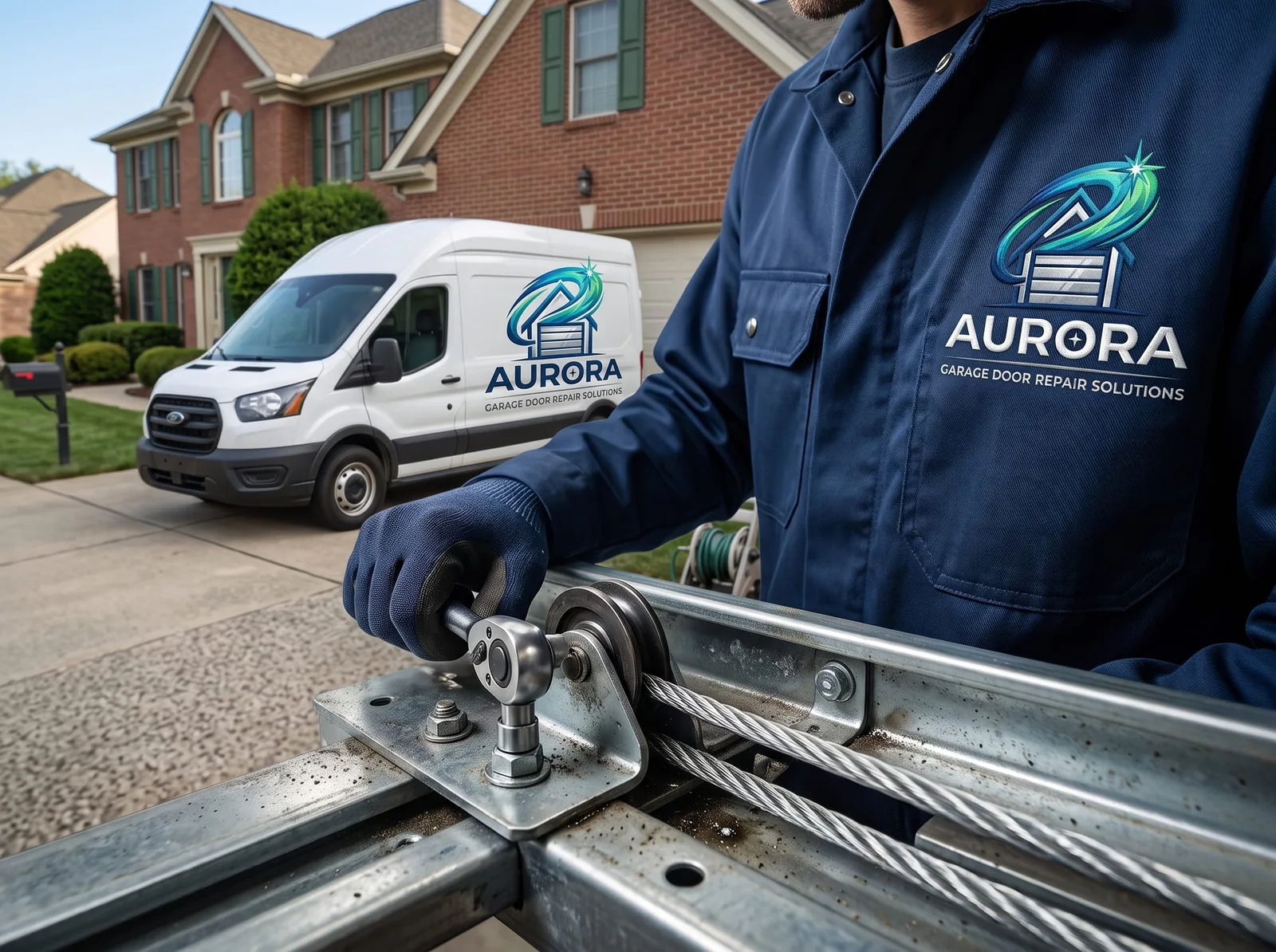
A garage door rarely fails all at once. Usually one part goes first — a spring loses tension, a cable frays, a roller cracks — and the rest of the system compensates until something else gives out too. Aurora Garage Door Repair Solutions has spent 17 years tracking down that first point of failure for homeowners across Aurora, IL, from older sectional doors near Stolp Island to newer builds out toward Fox Valley Mall.
This page covers general garage door repair: the full range of problems that can bring a door to a stop, including broken springs, snapped or frayed cables, worn rollers, bent or misaligned tracks, damaged panels, and opener malfunctions. Each of those has its own dedicated page further down if you already know what's wrong. If you don't, that's fine — every service call starts with a full diagnostic instead of a guess.
Ryan Delaney, who founded the company in 2009 after watching a neighbor's spring snap and nearly cause an injury, still trains every technician to slow down specifically on spring and cable work. A garage door system stores more mechanical energy than most homeowners realize, and a large share of our repair calls involve a component that was under tension when it failed.
Signs Your Garage Door Needs Repair
Most garage door problems show warning signs before the door stops working completely. Catching them early usually means a smaller repair instead of a full breakdown on the coldest morning of the year.
- Springs: a loud bang from the garage, a visible gap in the coiled torsion spring above the door, or the door suddenly feeling much heavier to lift by hand.
- Cables: a door hanging crooked on one side, fraying near the bottom bracket, or a cable that has slipped off its drum.
- Rollers: grinding or squealing as the door moves, or a door that jerks instead of gliding smoothly through its track.
- Tracks: a visible gap between roller and rail, a bent section, or a door that binds partway through its cycle.
- Panels: dents, cracks, or warping that keep a section from sitting flush, which can throw off the whole door's balance over time.
- Openers: a door that responds slowly, reverses for no reason, or ignores the remote and wall button entirely.
Any one of these on its own is usually a straightforward fix. Left alone long enough, most of them start putting extra strain on whichever part is left carrying the load.
What Happens During a Repair Visit
When a technician arrives, the first step isn't opening a toolbox — it's watching the door move. Most problems announce themselves in how a door travels: a lean to one side usually points to a cable, a shudder partway up usually points to a track or roller, and a door that won't budge at all almost always means a broken spring.
After that visual check, we test spring tension and balance, inspect both cables near the drums for fraying, run the rollers through the track by hand, and check the opener's force settings and auto-reverse safety sensors. On a door with one obvious problem, this takes a few minutes. On an older door with several parts nearing the end of their service life, it's what keeps you from replacing a spring only to have a worn cable fail on you a few weeks later.
Once we know what's actually wrong, we explain it in plain terms and provide a written quote before touching anything. No guessing, and no pressure to bundle in work the door doesn't need yet.
Why Aurora Winters Are Hard on Garage Door Systems
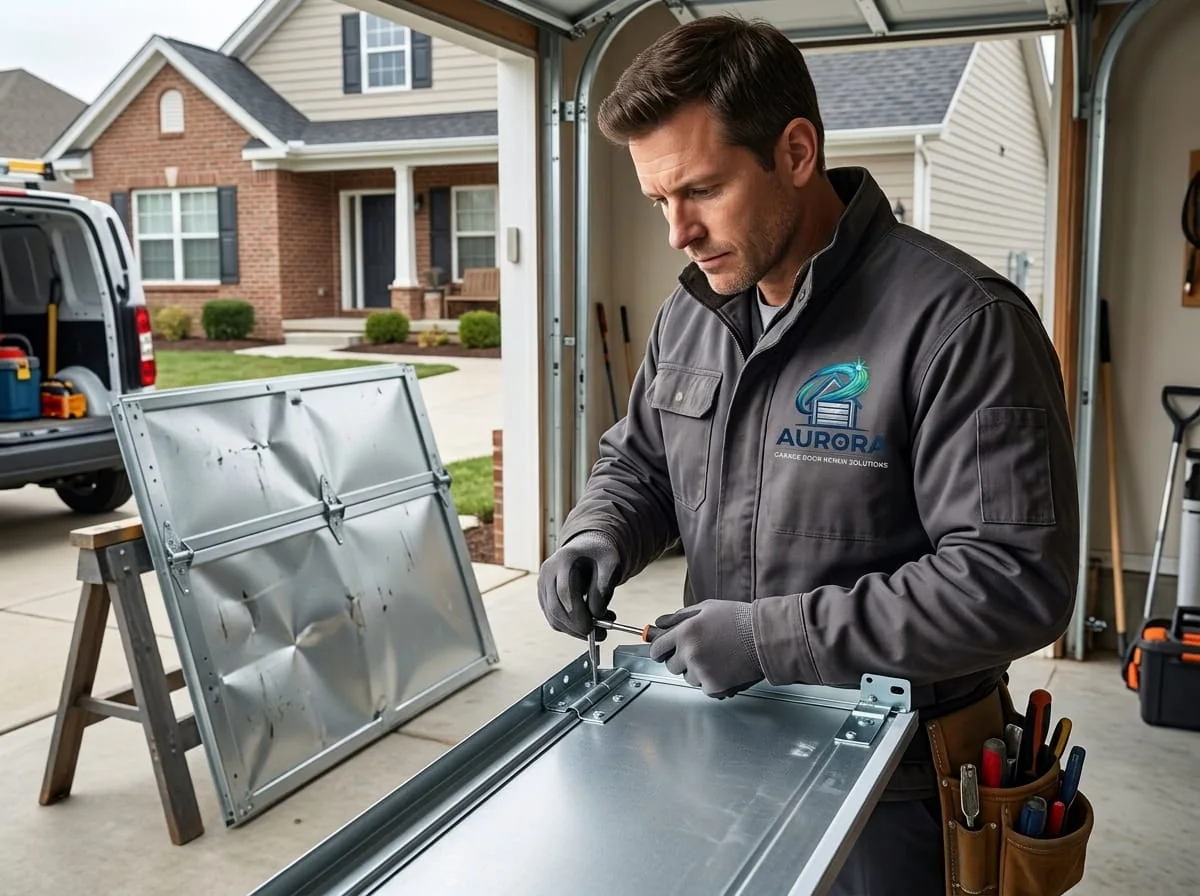
Aurora's winters put real, measurable stress on garage door hardware. With January highs averaging around 30°F and lows near 16°F, steel torsion springs contract in the cold and lose a portion of their working tension — part of why so many spring failures happen on the coldest mornings of the year rather than gradually over a mild fall. Torsion springs are typically rated by manufacturers for a set number of open-and-close cycles before they're expected to wear out, a standard covered in DASMA's technical data on spring cycle life, and cold weather accelerates the effective wear on a spring that's already near the end of that range.
Metal tracks contract too, and a track that ran smoothly in August can start binding slightly once temperatures drop, especially if it wasn't quite aligned to begin with. Nylon rollers get more brittle in the cold and are more likely to crack under the same load they'd handle fine in July. Opener lubricant thickens on the coldest days, which can make a chain or belt drive feel sluggish or noisy. Add in freeze-thaw cycles that shift a concrete slab or driveway apron slightly year over year, and it's easy to see why so many of our winter service calls involve more than one worn part at once.
None of this means a door is doomed to fail every winter. It does mean a door already showing wear in the fall is far more likely to reach a breaking point once Aurora's cold really sets in.
Why DIY Garage Door Repair Is Risky
A standard torsion spring holds enough stored energy to cause a serious injury if it's handled incorrectly, which is exactly why our founder started this company after watching it happen to a neighbor. Extension springs carry similar risk and are required to have separate safety containment cables for this reason, per longstanding CPSC safety guidance on garage door hazards.
Beyond the springs themselves, a door that's out of balance or has a compromised cable can drop unexpectedly while someone is working underneath it. Even a task that looks simple, like removing a bent track section, usually means disconnecting the opener and supporting the full weight of the door by hand. We're not against homeowners handling routine maintenance — tightening loose hardware, clearing track debris, lubricating hinges — but anything involving a spring, cable, or the door's structural balance is where we'd ask you to call a technician instead.
The Repairs We Handle Most Often
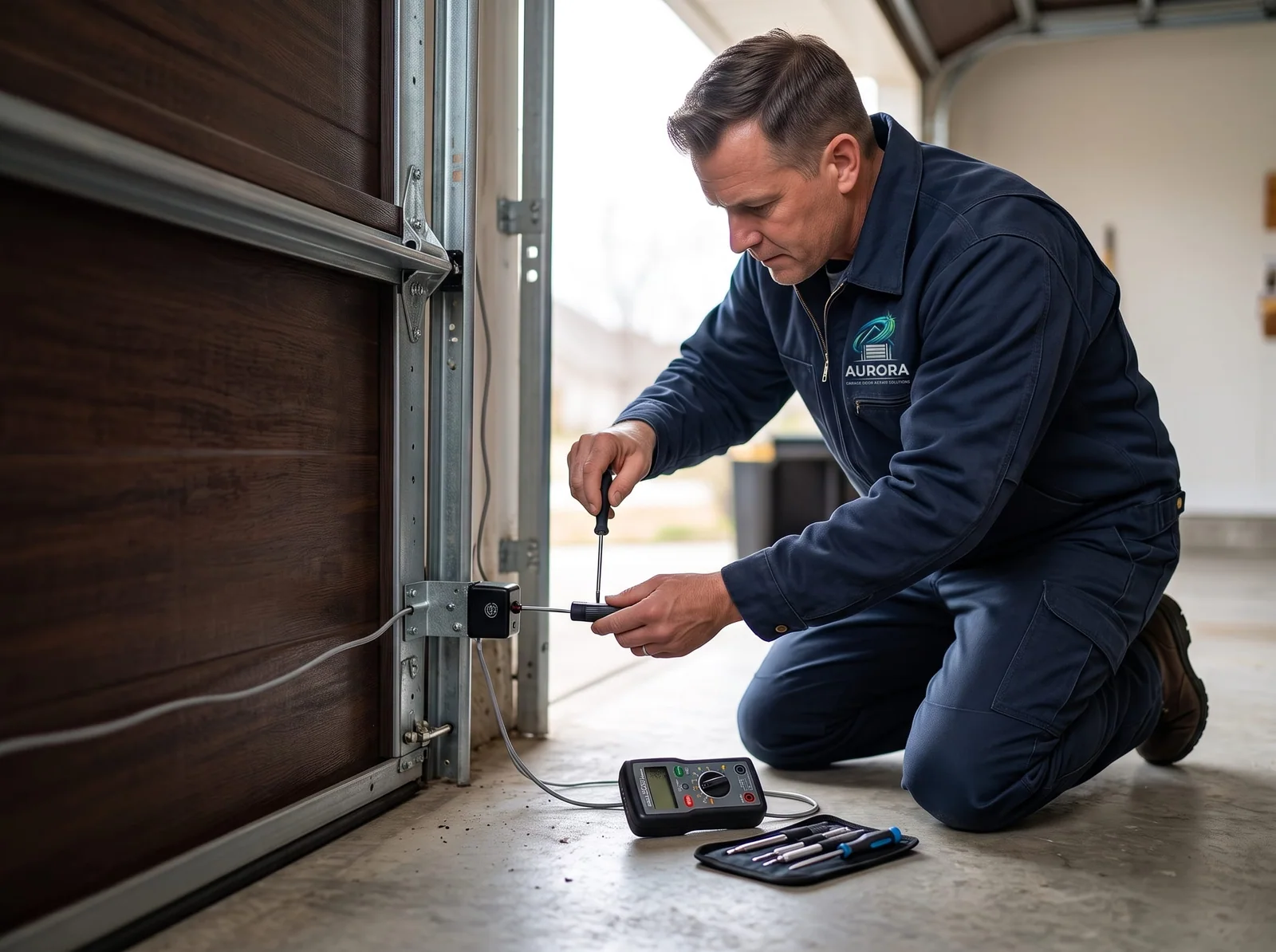
General garage door repair covers a wide range of specific problems, and most doors that come through our schedule have one primary failure point even if a few other parts are showing wear. Here's how the most common issues break down, with more detail on each dedicated page:
- Springs — our most common call, especially in winter; see broken spring repair for how torsion and extension systems differ.
- Cables — frayed or snapped cables often show up alongside spring issues; our cable repair page covers the warning signs.
- Rollers — worn or cracked rollers cause the grinding noise many homeowners notice first; see roller repair for details.
- Tracks — bent rails or a door that has jumped its track entirely; our off-track garage door repair page covers what to do, and not do, in that situation.
- Panels — dents and cracks from weather or impact; our panel replacement page explains when a single-panel swap makes sense versus a full door replacement.
- Openers — motors, sensors, and remotes that stop responding reliably; see garage door opener repair for common opener issues.
If more than one of these sounds familiar, that's normal. A diagnostic visit sorts out which one is the actual root cause.
Why Aurora Homeowners Choose Aurora Garage Door Repair Solutions
We've been fixing garage doors in Aurora since 2009, long enough to have serviced doors on the same block more than once and to know which neighborhoods tend to have older aluminum doors versus newer insulated steel ones. Ryan Delaney, our founder and lead technician, still takes service calls himself and trains the rest of the team to treat every spring and cable job with the same care he learned early in his career.
Our technicians are background-checked and insured, we provide upfront pricing before any repair starts, and we offer same-day appointments where possible for anything that's left your garage door stuck, unsafe, or unusable. If you're not sure whether your issue needs a technician or just a minor adjustment, contact us and we'll walk you through it honestly, even if that means telling you it's a five-minute fix.
What to Expect When You Call
Call or Request an Appointment
Tell us what the door is doing, or not doing, and we'll schedule a same-day or next-available visit.
On-Site Diagnostic
A technician inspects the springs, cables, rollers, tracks, panels, and opener to find the actual cause, not just the obvious symptom.
Upfront Quote
You get a clear, written quote before any repair work starts, with no pressure to add services the door doesn't need.
Repair and Safety Check
We complete the repair, then test door balance, full travel, and auto-reverse safety sensors before we leave.
Walkthrough and Maintenance Notes
We show you what was fixed and point out anything else worth watching so a small issue doesn't turn into a bigger one.
Garage Door Repair in Aurora, IL FAQs
How much does garage door repair cost in Aurora, IL?
Cost depends on which parts are involved, how many springs or cables need replacing, and the age and size of the door. Aurora Garage Door Repair Solutions provides a free, upfront quote before any work begins so you know the cost before we start.
Can I fix a garage door problem myself?
Some minor tasks, like tightening loose hardware or lubricating hinges, are reasonable to handle yourself. Spring, cable, and track repairs involve components under significant tension and are safer left to a trained technician.
How long does a typical garage door repair take?
Most single-issue repairs, like a spring or roller replacement, are completed within one to two hours in a single visit. More involved jobs, such as multiple damaged panels, can take longer.
Is it dangerous to leave a broken garage door overnight?
A door stuck open is a security concern, and a door that's off-track or has a failed spring can be a safety hazard if someone tries to force it closed. We offer priority same-day scheduling where possible for anything unsafe to leave alone.
Do you offer same-day garage door repair in Aurora?
Yes, we offer same-day appointments where possible, and we return after-hours calls first thing the next business day.
How do I know if I need a repair or a full door replacement?
If the frame, track, and opener are all in good shape and the problem is isolated to one component, repair is usually the more practical option. We give you an honest, on-site assessment rather than pushing a replacement you don't need.
Will homeowner's insurance cover my garage door repair?
That depends entirely on your specific policy and what caused the damage, so it's worth checking directly with your insurance provider. We can provide documentation of the repair if you need it for a claim.
Need Garage Door Repair in Aurora, IL?
Aurora Garage Door Repair Solutions is ready to help — call now for a free, upfront quote.