
Noisy Garage Door Repair in Aurora, IL
Every garage door noise means something specific. We listen first, diagnose the real cause, and fix it before a small squeak turns into a stuck door.
- Locally owned since 2009
- Insured, background-checked techs
- Free upfront quotes
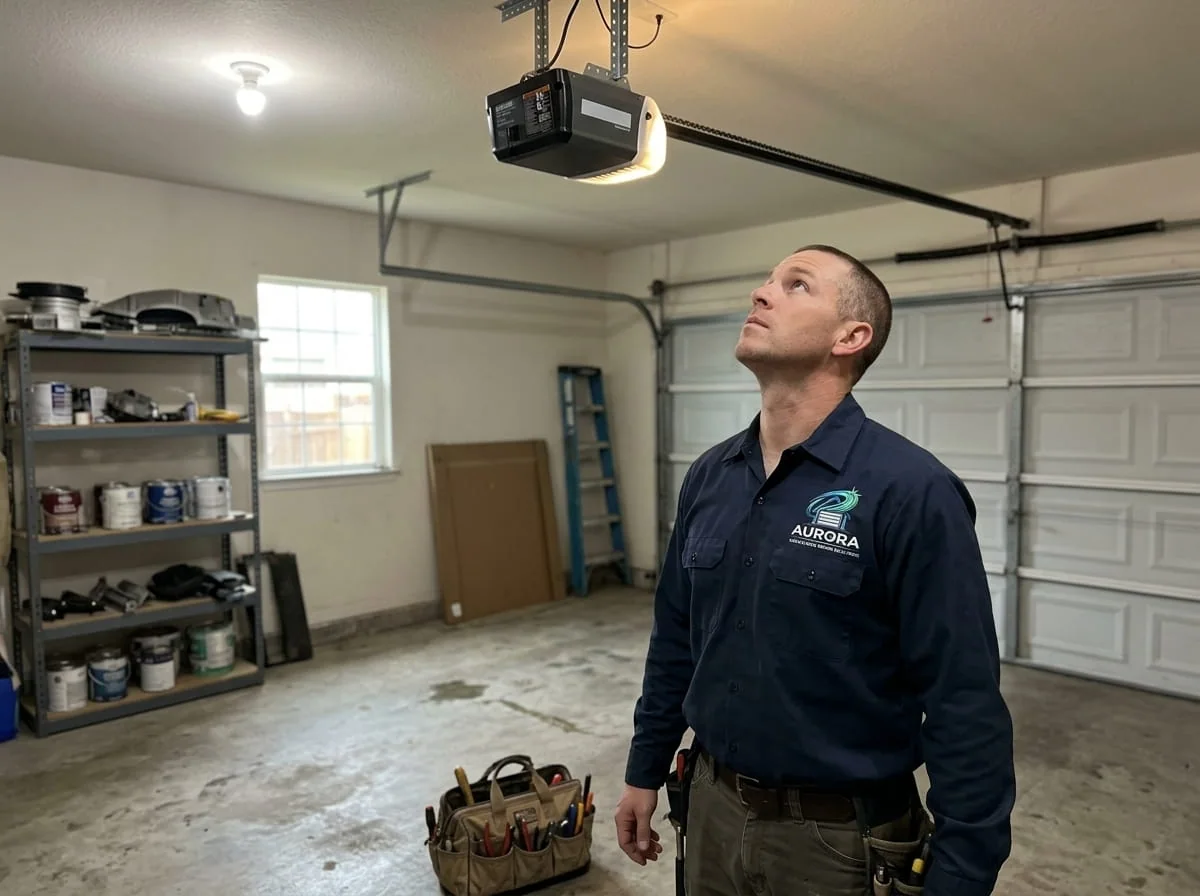
A garage door that suddenly gets loud is rarely being dramatic for no reason. The sound itself is diagnostic information — a grinding gear, a dry hinge, and a broken spring all announce themselves differently, and knowing which is which can save you from an unplanned Saturday morning breakdown. Aurora Garage Door Repair Solutions gets calls from homeowners across Aurora and the Fox Valley describing everything from a faint squeak to a sound one customer compared to a gunshot in the garage, and in nearly every case the noise had been building for weeks before it became impossible to ignore.
Illinois winters make this worse. Cold contracts metal hardware, thickens the grease inside opener gearboxes, and turns older nylon rollers brittle enough to crack and chatter against the track. A door that ran quietly all summer can start grinding or popping the first hard freeze of the season simply because clearances tightened up and lubricant that used to flow now sits thick. None of that means the door is failing, but it does mean the noise deserves a real look rather than a shot of whatever spray lubricant happens to be on the shelf.
This page walks through what the common noises usually mean, what routine lubrication actually helps, and when a noise is worth a service call rather than a wait-and-see approach. If you'd rather skip straight to a diagnosis, call (331) 321-4074 and describe what you're hearing — our technicians can often narrow down the likely cause before they even arrive.
What Different Garage Door Noises Usually Mean
Not every noise points to the same repair, and guessing wrong wastes time and sometimes money on the wrong fix. Here's what we typically find when a homeowner describes each sound:
- Grinding or scraping — usually worn rollers that have lost their bearing surface, or a worn gear inside a chain-drive or screw-drive opener. Metal-on-metal grinding coming from the opener head is a sign the internal gear is close to failing.
- Squeaking or high-pitched chirping — almost always dry hinges, rollers, or the fixture brackets where the door pivots. This is the noise most likely to be solved with proper lubrication rather than a repair.
- Banging or a loud pop — most often a spring or hardware issue. A single loud bang followed by the door feeling heavy or refusing to open is a classic sign a torsion spring has broken. Repeated banging during travel can point to a loose track bracket knocking against the wall stud.
- Rattling — loose hardware, such as bolts on the track brackets, a loose opener rail, or a disconnected support strut. Rattling rarely means something is broken yet, but it means something has worked itself loose and is wearing against metal it shouldn't be touching.
- Humming with no movement — the opener motor is receiving power but the door isn't traveling. This usually points to the opener's capacitor, a stripped drive gear, or a jammed drive mechanism rather than anything with the door panels themselves.
Sound alone isn't a perfect diagnosis — a badly worn roller can sometimes sound close to a spring problem — but it narrows the possibilities enough to know whether a repair is urgent or routine.
How We Diagnose a Noisy Door
Our technicians start by asking what the noise sounds like, when it happens in the door's travel, and whether it changed suddenly or crept in gradually. That alone usually narrows the likely cause before a truck is even on the way.
On site, we run the door manually with the opener disconnected to isolate whether the noise comes from the door hardware or the opener itself, then cycle it under power while checking rollers, hinges, cables, springs, and the track alignment along the way. Most noisy-door calls get pinpointed within the first several minutes of the visit.
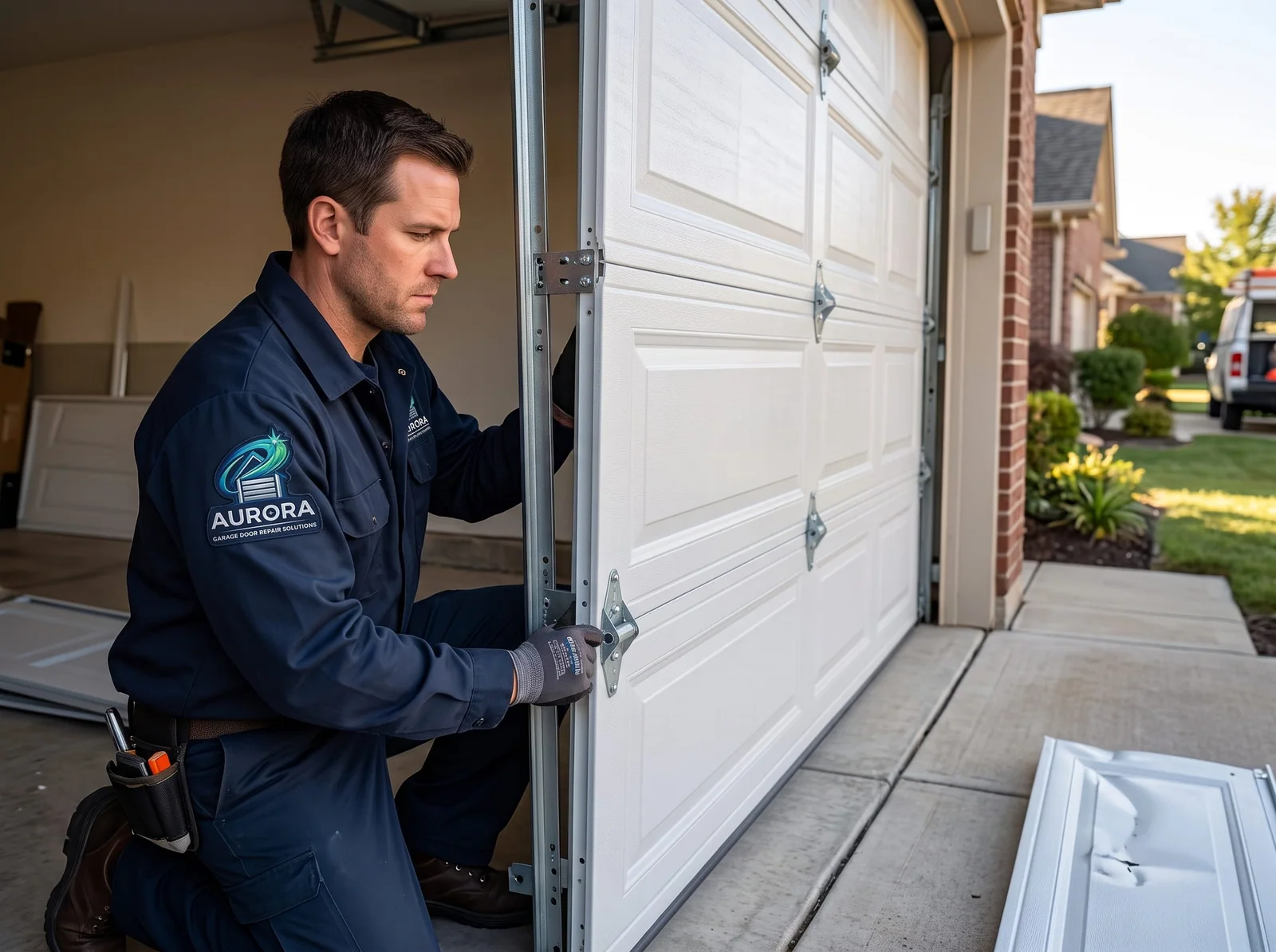
Simple Lubrication That Prevents Most Squeaks
A surprising share of noise complaints trace back to dry metal rather than a broken part, and a few minutes of the right kind of lubrication a couple of times a year prevents most of it.
- Lubricate: roller bearings, hinges, and the brackets where metal pivots against metal. A light coat on the inside curve of the tracks helps rollers glide, but the track surface itself shouldn't be soaked — excess lubricant on the track just collects grit and dirt.
- Don't over-lubricate springs: torsion springs benefit from a light, purpose-made application occasionally, not a heavy coating and not household oil or a degreasing spray. Too much of the wrong product attracts dust and grit that accelerates wear on the coils instead of protecting them.
- Skip the multi-purpose spray: a common water-displacing spray is built to loosen rust and push out moisture, not to lubricate long-term — it evaporates quickly and can leave hardware drier than before. A white lithium grease or silicone-based garage door lubricant holds up longer and attracts less debris.
Why a Noisy Door Is an Early Warning, Not Just an Annoyance
A door that's merely loud is usually still a smaller repair than a door that has stopped working. Worn rollers left in place keep grinding against the track and can wear a groove into the rail, turning what would have been a roller repair into a roller-and-track repair. A dry hinge that's ignored adds resistance the opener has to fight through on every cycle, which shortens the working life of the opener itself.
Aurora Garage Door Repair Solutions provides free, upfront quotes, so there's no cost to finding out whether a noise is a quick fix or something that needs parts. The real cost of waiting isn't the inspection — it's letting a small, cheap-to-fix problem wear into a bigger one that takes down the whole door.
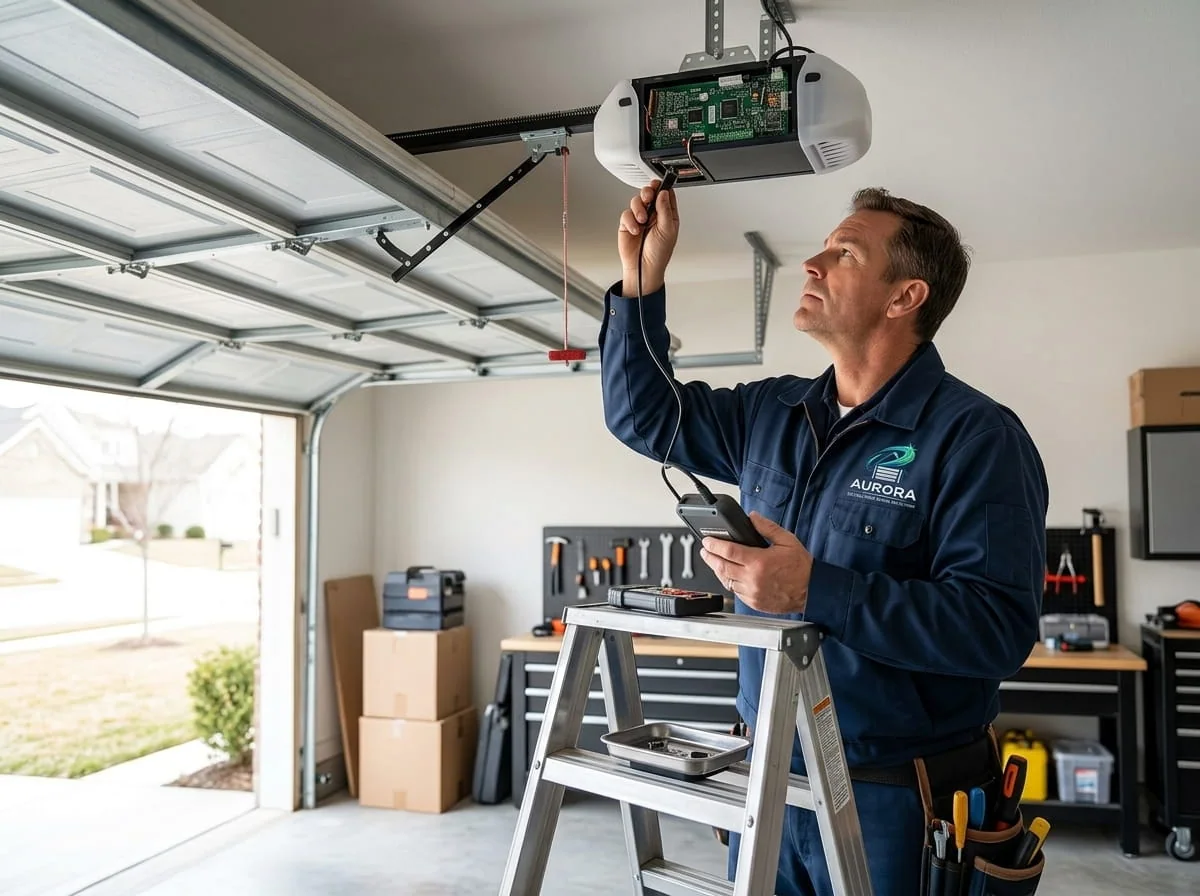
Aurora Winters and Why Doors Get Louder in the Cold
Torsion springs lose tension as metal contracts in the cold, which is part of why more springs break in January than in July. That same contraction tightens clearances throughout the hardware, so a track that ran quietly all summer can start binding slightly once temperatures drop, producing a new grinding or scraping sound that wasn't there before.
Older nylon rollers get brittle in cold weather and are more likely to chip or flat-spot, which shows up as a rhythmic thump or grind that matches the door's travel speed. Freeze-thaw cycles in the slab under the track can also shift alignment slightly over a winter, which is worth checking if a noise appears every year around the same time.
Why DIY Noise Fixes Can Make Things Worse
Lubricating a squeaky hinge or roller is a reasonable homeowner task. Diagnosing a bang or a pop is not, because the most common cause — a torsion spring under extreme tension — can cause serious injury if handled without the right tools and training. Extension spring systems carry their own risk if the safety cables aren't intact, since a failed spring without containment can become a projectile.
Tightening random bolts to quiet a rattle can also mask a bigger problem, such as a bracket that's loose because the wall anchor behind it has already pulled partway out. A technician who traces the rattle to its source can tell the difference between a five-minute tightening job and a bracket that needs to be reset properly.
Why Aurora Homeowners Call Us for Noise Complaints
Ryan Delaney started this company in 2009 after helping a neighbor whose spring snapped and nearly caused an injury, and that experience still shapes how the team treats every noise complaint that could involve a spring. We've been listening to Aurora garage doors for 17 years, and a loud door rarely surprises us.
Our technicians are background-checked and insured, repairs are workmanship-backed, and we offer same-day appointments where possible so a noise that's bothering you doesn't have to wait a week to get looked at.
What to Expect When You Call
Describe the noise
Tell us what it sounds like and when it happens so we can narrow the likely cause before we arrive.
On-site inspection
We run the door manually and under power, checking rollers, hinges, springs, cables, and the opener along the way.
Pinpoint the source
We isolate the exact cause of the noise and walk you through it in plain language along with a free upfront quote.
Repair and test
In most cases we complete the repair the same visit and cycle the door repeatedly to confirm it runs quietly.
Noisy Garage Door Repair in Aurora, IL FAQs
Why is my garage door suddenly making noise?
Noise usually builds gradually as rollers wear, hinges dry out, or hardware loosens, and it often becomes noticeable all at once when a threshold is crossed, such as cold weather tightening clearances. A sudden new noise is worth a look even if the door still opens and closes normally.
Is a noisy garage door dangerous?
A squeak from a dry hinge isn't dangerous by itself, but a loud bang or pop can mean a spring has failed under high tension, which is a genuine safety hazard. Any sudden bang, especially if the door feels heavier afterward, should be treated as a reason to stop using the door until it's inspected.
Can I fix a noisy garage door myself?
Lubricating rollers and hinges with the right product is a safe homeowner task and fixes many squeaks. Diagnosing or working on anything related to a bang, pop, or a spring should be left to a technician, since torsion and extension springs hold enough stored tension to cause serious injury.
What kind of lubricant should I use on a garage door?
A white lithium grease or silicone-based garage door lubricant works best on rollers, hinges, and tracks. A general water-displacing spray lubricant is meant for loosening rust, not long-term lubrication, and tends to burn off quickly.
How much does it cost to fix a noisy garage door?
Cost depends on the source of the noise, since a roller replacement, a spring repair, and an opener gear repair are very different jobs with different parts involved. Aurora Garage Door Repair Solutions provides a free upfront quote after inspecting the door, so you know the cost before any work begins.
Will a noisy opener need to be replaced?
Not necessarily. A worn drive gear or a failing capacitor can often be replaced individually without replacing the whole opener unit. We only recommend full replacement when the motor itself has failed or when parts are no longer practical to source.
How long does it take to diagnose and fix a noisy garage door?
Diagnosis typically takes a matter of minutes once a technician is on site. Most roller, hinge, and hardware repairs are completed the same visit; a repair that requires an ordered part may need a short follow-up appointment.
Need Noisy Garage Door Repair in Aurora, IL?
Aurora Garage Door Repair Solutions is ready to help — call now for a free, upfront quote.