
Garage Door Opener Installation in Aurora, IL
A properly sized, correctly calibrated opener keeps your garage door quiet, reliable, and safe for years — get it installed right the first time.
- Locally owned since 2009
- Insured, background-checked techs
- Free upfront quotes
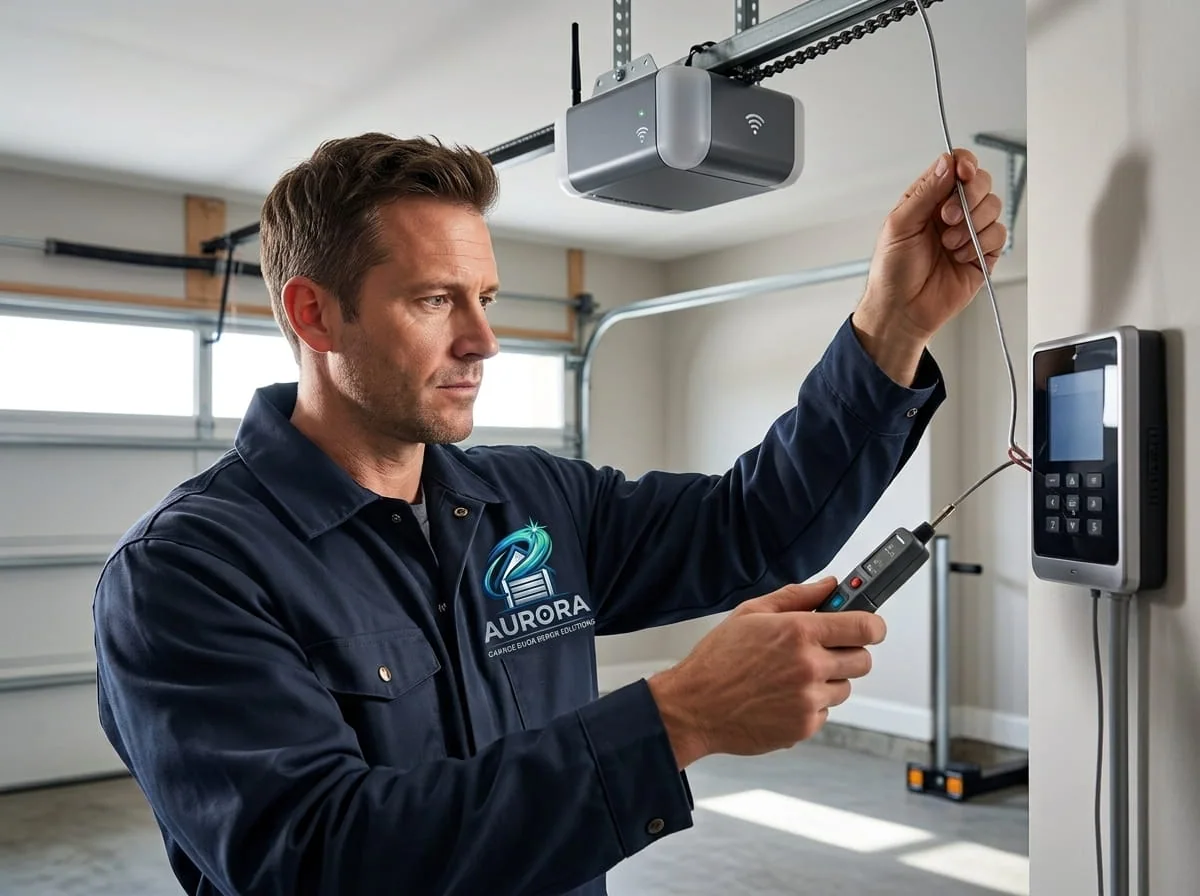
Swapping out a worn-out garage door opener sounds simple until you're standing in the garage holding a manual with settings for force, travel limits, and sensor alignment that all interact with each other. Get any one of those wrong and you can end up with a door that reverses when it shouldn't, or worse, an opener whose safety-reversal feature never engages at all. Ryan Delaney and the team at Aurora Garage Door Repair Solutions install openers on doors ranging from single-car garages on Aurora's east side to oversized doors on newer builds near North Aurora, and every installation gets the same careful calibration regardless of the job size.
The right opener depends on more than horsepower marketing. Door weight, size, headroom, and how the garage is used day to day all factor into which drive type and lift capacity actually make sense. A door that's too heavy for its opener's rated lift force will strain the motor and wear out gears early; a door that's oversized for the opener may not open fully in cold weather when grease inside the unit and the door's own hardware both stiffen up. We size the opener to the door in front of us, not to whatever happens to be in stock.
This page covers the drive types available, how sizing works in practical terms, what smart features actually add day to day, and why the installation itself — not just the opener you choose — is where safety and longevity get decided.
Signs Your Opener Needs Replacing
Some openers give plenty of warning before they fail outright, and others just stop one morning. Common signs it's time to replace rather than repair include a motor that runs but the door doesn't move, grinding or straining sounds under load, a door that reverses randomly for no obvious reason, an opener old enough that replacement parts are hard to source, or a unit that simply predates any safety-reversal or sensor technology. If your opener is original to a house built decades ago, it likely lacks the rolling-code security and auto-reverse sensitivity that current safety expectations call for.
- Door hesitates, stalls, or needs a manual push to finish opening or closing
- Opener runs noticeably louder or hotter than it used to
- Remote range has shrunk to a few feet from the driveway
- No response to the wall button, remote, or vehicle-integrated control
- You've had more than one repair call on the same unit in the past year
Choosing the Right Drive Type
Openers are generally grouped by how they physically pull the door along the rail, and each type trades off differently between noise, durability, and how much ceiling clearance it needs.
- Chain drive: A metal chain pulls the trolley along the rail. It's the most durable option under heavy, frequent use and typically the least expensive to maintain, but it's also the loudest of the common drive types — a real consideration for a garage under or next to a bedroom.
- Belt drive: A reinforced rubber belt replaces the chain, cutting vibration and noise substantially. It's a common choice for garages with living space directly above or attached, at a similar durability level to chain drive for typical residential use.
- Screw drive: A threaded steel rod moves the trolley directly, with fewer moving parts than chain or belt systems. That simplicity can mean less to maintain, though performance can vary more with temperature extremes than belt or chain systems.
- Wall-mount / jackshaft drive: Instead of running along an overhead rail, this style mounts beside the door and turns the torsion shaft directly. It frees up the entire ceiling, which matters in garages used for storage, overhead shelving, or lifts, and it's often the better fit for garages with high-clearance vehicles, trucks, or minimal headroom above the door.
Sizing Lift Force to Your Door
Opener lift capacity has to match what the door actually weighs and how it's balanced on its springs — not just the door's width. A single-car door is generally lighter and needs less lift force than a double-wide or oversized door, and insulated steel or wood doors weigh meaningfully more than thin uninsulated panels of the same size. An opener rated for lighter-duty use on a heavy insulated double door will work harder than it should, shortening the life of its gears and drive components, while an opener sized generously for a light door isn't wasted — it just has more reserve capacity for years of use.
Spring balance matters just as much as opener sizing. If the torsion or extension springs are weak, worn, or mismatched to the door's weight, the opener ends up doing work the springs should be doing, and no amount of extra horsepower fixes a door that isn't balanced correctly on its own hardware. Part of a proper opener installation includes checking that the door lifts and holds at roughly the halfway point under manual operation before the new opener ever gets connected.
Smart Features Worth Considering
Most current openers offer some combination of connected features, and which ones are worth paying for depends on how you use the garage.
- Smartphone app control: Lets you open, close, and check the door's status remotely, which is useful for confirming the door actually closed after you've left, or letting in a delivery or service visit without a physical key.
- Battery backup: Keeps the opener functional through a power outage, so the door can still be opened and closed manually through the opener rather than relying entirely on the manual release cord. This is worth real consideration given how often Aurora sees winter storm-related outages.
- Rolling security codes: Instead of a fixed remote code that could be captured and reused, the opener and remote generate a new code with each use, closing off a security gap that older fixed-code systems have.
None of these features substitute for correct mechanical installation and safety calibration — they're additions on top of a properly set up opener, not a replacement for one.
Why Professional Installation Matters
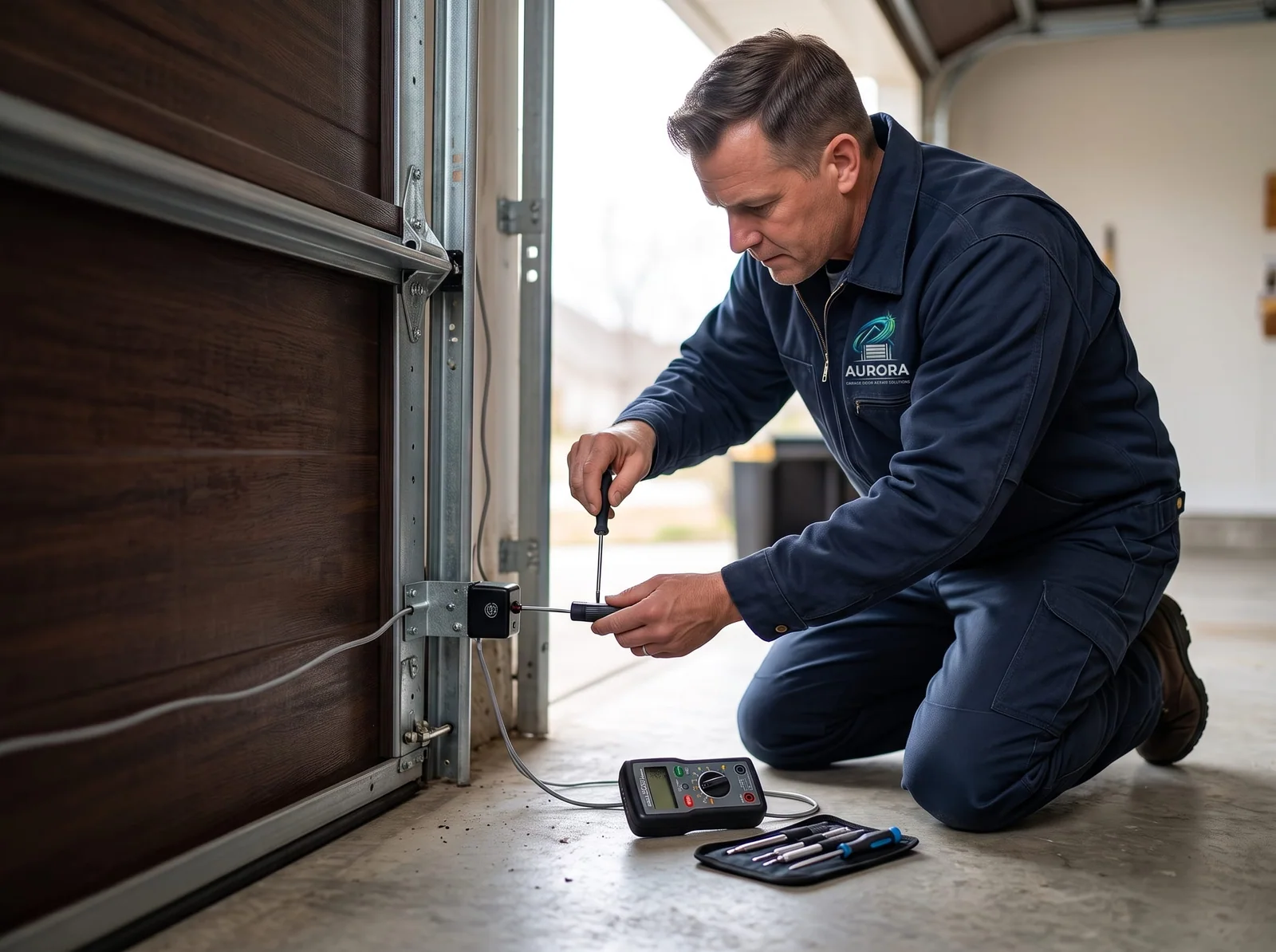
Every garage door opener has a required federal safety feature: if the closing door meets resistance, it has to stop and reverse. That reversal is governed by force and travel-limit settings inside the opener, and those settings are specific to the door's weight, balance, and travel distance. Set the force too high to compensate for a heavy or poorly balanced door, and the safety-reversal feature can be effectively defeated — the door won't stop for an obstruction the way it's supposed to, because the opener has been told to push through resistance instead of reversing on it.
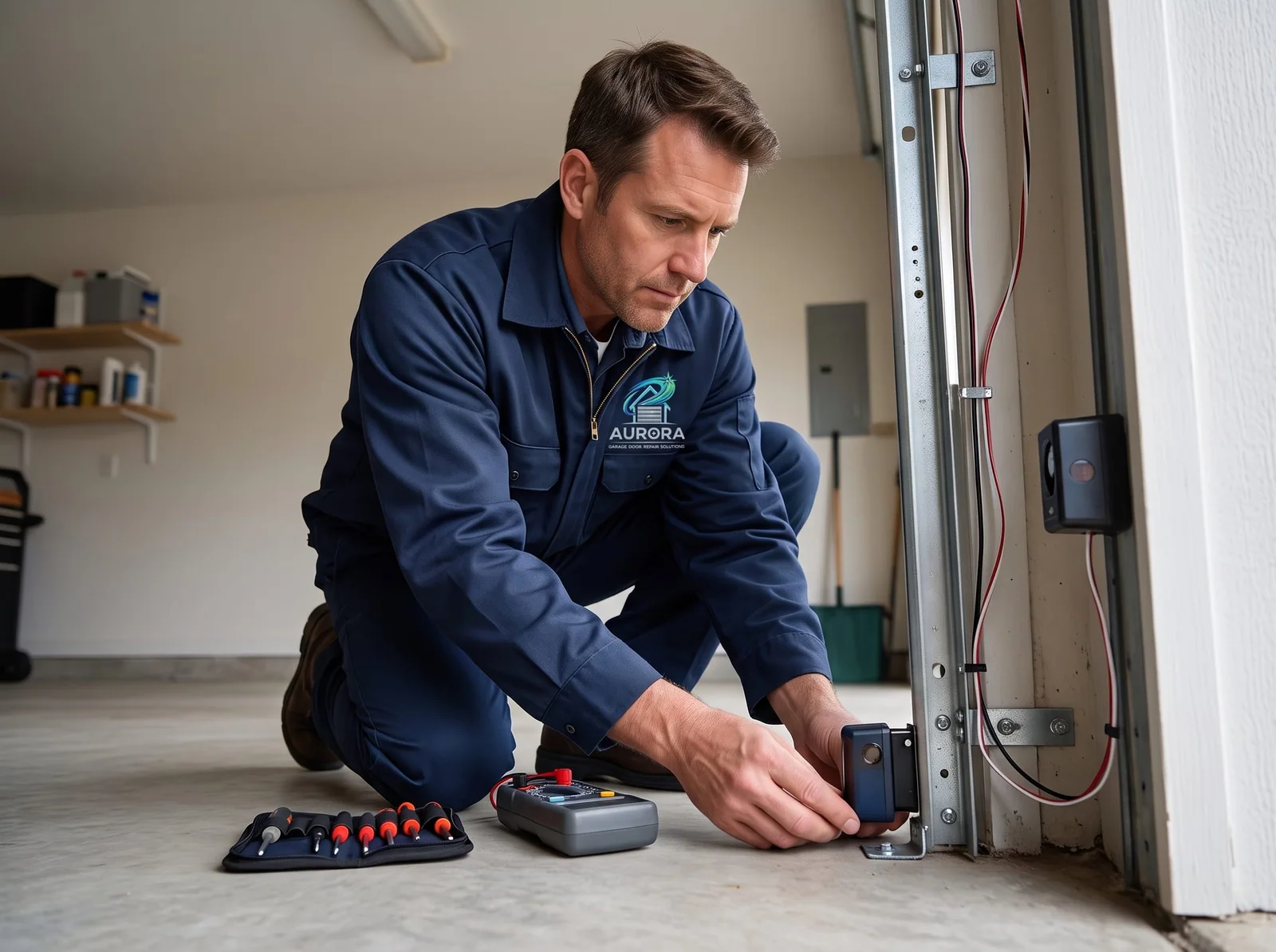
The photoelectric safety sensors mounted near the bottom of the tracks have to be aligned to within a narrow tolerance of each other, facing directly across the door opening. Sensors that are slightly misaligned, knocked out of position, or mounted at mismatched heights can fail silently — the door might work fine most of the time and then fail to detect an obstruction at the one moment it matters. Getting travel limits, force settings, and sensor alignment right together, and verifying them with an actual obstruction test rather than just visual inspection, is the difference between an opener that's technically installed and one that's actually safe.
Aurora Winters and Opener Performance
Cold weather affects openers as much as it affects springs and tracks. Lubricant inside the opener's gear housing thickens in low temperatures, making the motor work harder to start moving the door — a factor worth weighing when comparing lift-force ratings, since a unit with some reserve capacity handles Aurora's January mornings better than one sized to the bare minimum. Battery backup units can also see reduced runtime in cold garages, since battery capacity drops with temperature. If your garage is unheated and faces a typical Illinois winter with average lows in the teens, we factor that into which opener and settings make sense rather than defaulting to whatever's easiest to install.
Why Aurora Homeowners Choose Us for Opener Installation
Ryan Delaney has been installing and repairing garage door openers around Aurora since 2009, which means he's seen how specific opener models age in this climate over a full decade or more — not just how they perform on install day. Every installation includes force, travel-limit, and safety-sensor calibration verified with an actual obstruction test, not just a visual check, and we walk you through the app setup and remote programming before we leave. Our technicians are insured and background-checked, and we provide upfront, honest pricing with a free quote before any work begins — no guessing at cost over the phone.
What to Expect When You Call
Door and Track Assessment
We check the door's weight, balance, spring condition, and track alignment before recommending an opener, since those factors determine the right lift capacity.
Opener and Drive Type Selection
We walk through drive type and feature options together based on your garage's noise sensitivity, ceiling clearance, and how you want to control the door.
Removal and Mounting
Any old opener is removed and the new unit is mounted, wired, and connected to the door with properly secured hardware.
Force, Limit, and Sensor Calibration
We set travel limits and force settings to the specific door, align the safety sensors precisely, and verify auto-reversal with a physical obstruction test.
Remote and App Walkthrough
We program remotes and keypads, set up rolling codes, and show you how to use the smartphone app and battery backup features before we leave.
Garage Door Opener Installation in Aurora, IL FAQs
Can I install a garage door opener myself?
Mechanically mounting an opener isn't the hard part; correctly setting force limits and aligning the safety-reversal sensors is where DIY installs most often go wrong. An opener that closes on an obstruction without reversing is a real safety hazard, so this is one repair where professional calibration is worth it even if the install itself looks straightforward.
How do I know what horsepower or lift force I need?
It depends on your door's weight and size rather than a fixed rule — insulated and double-wide doors generally need more lift capacity than lighter single-car doors. We assess your specific door and springs before recommending a unit rather than guessing from door width alone.
How long does opener installation take?
Most single-opener installations are completed in one visit, including calibration and a remote/app walkthrough. Exact time depends on whether an old opener needs removal and whether any wiring or mounting rail adjustments are needed.
Will my existing remotes work with a new opener?
Usually not directly, since most current openers use rolling security codes that differ from older fixed-code remotes. We can program new remotes and keypads as part of installation and show you how the updated system works.
What's the difference between chain, belt, and screw drive openers?
Chain drives are durable but louder, belt drives run quieter and suit garages near living space, and screw drives have fewer moving parts. Wall-mount or jackshaft openers skip the overhead rail entirely, which is useful for garages with storage or limited ceiling clearance.
Do I need a permit to replace a garage door opener?
Swapping an opener on an existing garage typically doesn't require a separate permit, but requirements can vary and change, so it's worth confirming specifics with the City of Aurora's Building & Permits division if you're unsure.
How much does garage door opener installation cost?
Cost depends on the drive type, lift capacity, and features you choose, plus whether an old opener needs removal. We provide a free, upfront quote before any work begins so there are no surprises.
Need Garage Door Opener Installation in Aurora, IL?
Aurora Garage Door Repair Solutions is ready to help — call now for a free, upfront quote.