
Garage Door Panel Replacement in Aurora, IL
A dented, cracked, or storm-damaged panel doesn't always mean a whole new door. We repair or replace individual sections and tell you honestly when it will or won't match.
- Locally owned since 2009
- Insured, background-checked techs
- Free upfront quotes
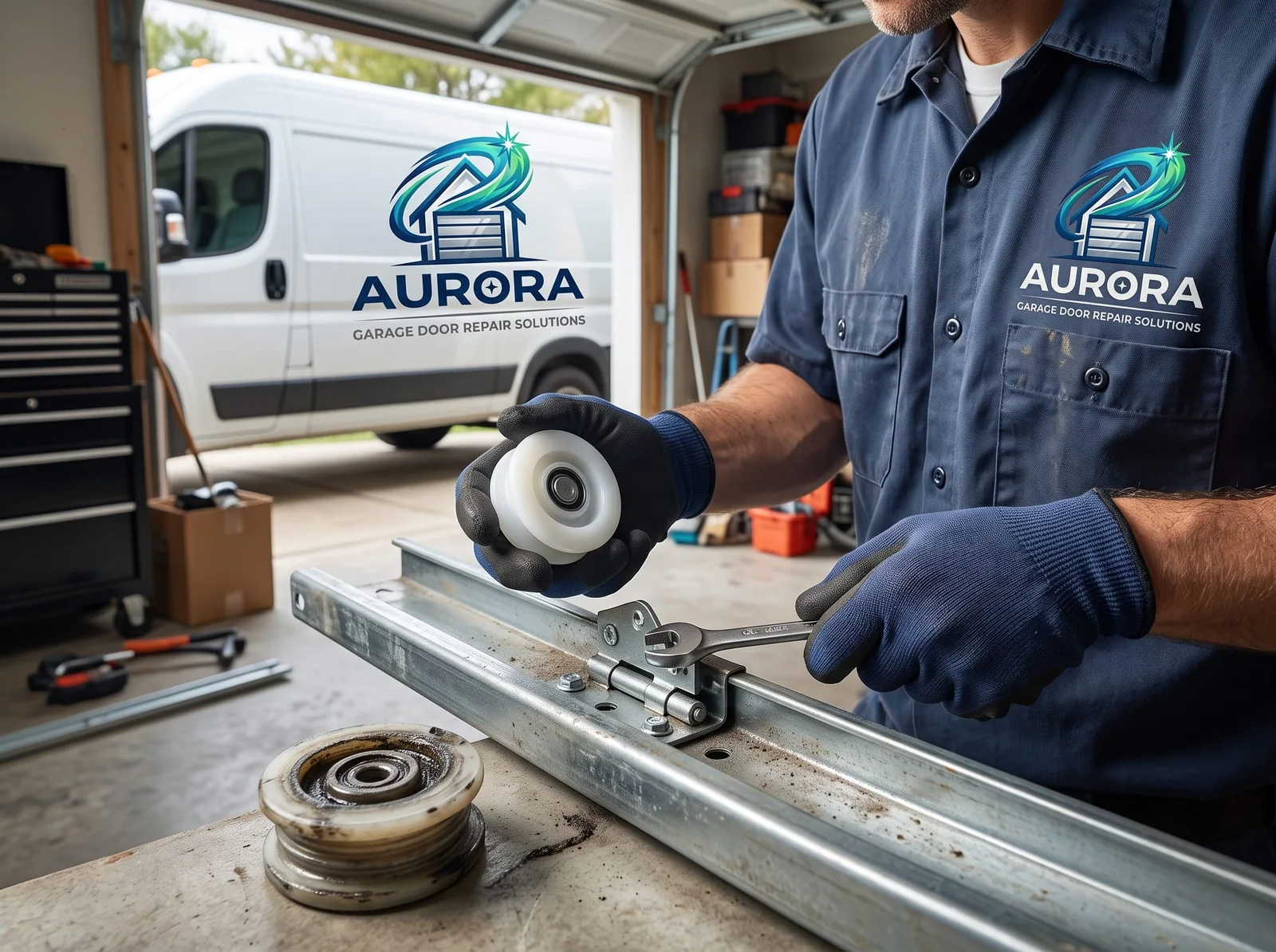
A dent from a bumper, a hailstorm that pitted one side of the door, or a section that's rusted through near the bottom track — none of these automatically mean you need a whole new garage door. Most doors installed in Aurora homes since the 1980s are sectional doors, built from individual horizontal panels bolted together with hinges. That construction means a technician can often unbolt and replace just the damaged section without touching the rest of the door.
Panel replacement isn't always straightforward, though. Matching an existing panel's color, texture, or profile gets harder the older the door is, and we'll walk you through that honestly before any work starts. Aurora's freeze-thaw winters and storm season also play a role in how panels get damaged and how well they hold up over time.
Aurora Garage Door Repair Solutions inspects the door in person, tells you plainly whether a panel swap will look right and function safely, and gives an upfront quote before doing any work — including telling you when full replacement is the better call.
Common Causes of Garage Door Panel Damage
Panel damage on Aurora garage doors usually traces back to one of a few repeat causes. A car backing out of the garage too quickly is the most common single cause we see — bumpers dent the bottom section, mirrors gouge the surface, or a trailer hitch punches straight through the steel skin. Hail and wind-driven debris from summer storms are a close second; a hailstorm that dings up your roof and siding often leaves dozens of small dents pockmarked across whichever panels faced the wind.
- Vehicles backing into the door or clipping it while pulling in
- Hail and storm-driven debris impact
- Rust developing at panel seams after years of freeze-thaw cycles
- Warping or delamination in wood or composite panels from summer humidity and winter dryness
- Everyday dings from ladders, sports equipment, or wind-blown yard items
Age plays a real role too. Steel panels that have taken decades of Aurora's freeze-thaw cycles can develop rust at the seams where moisture collects, and wood or composite panels absorb humidity in summer and dry out in winter until they warp or pull apart at the corners. None of that damage happens overnight — it shows up as a panel that no longer sits flush against its neighbors.
Signs You Need Panel Replacement, Not Just a Repair
Not every mark on a garage door panel calls for replacement. A shallow cosmetic dent that doesn't affect the door's curve or its seal against the weatherstripping can often be left alone. Panel replacement becomes the right call when:
- A dent is deep enough to bow the panel inward or outward, changing how it seals against the frame or the section beside it
- The impact has bent the panel's edge where it meets a hinge or roller stile, which can throw the door out of alignment
- Rust has perforated the steel skin rather than just staining the surface
- A wood or composite panel has cracked, split, or delaminated along a seam
- The damaged panel is visibly binding against the track or catching as the door moves
If you're not sure which category your door falls into, that's a normal question — it's usually easier to tell in person than from a phone description, which is part of why we look at the door before quoting anything.
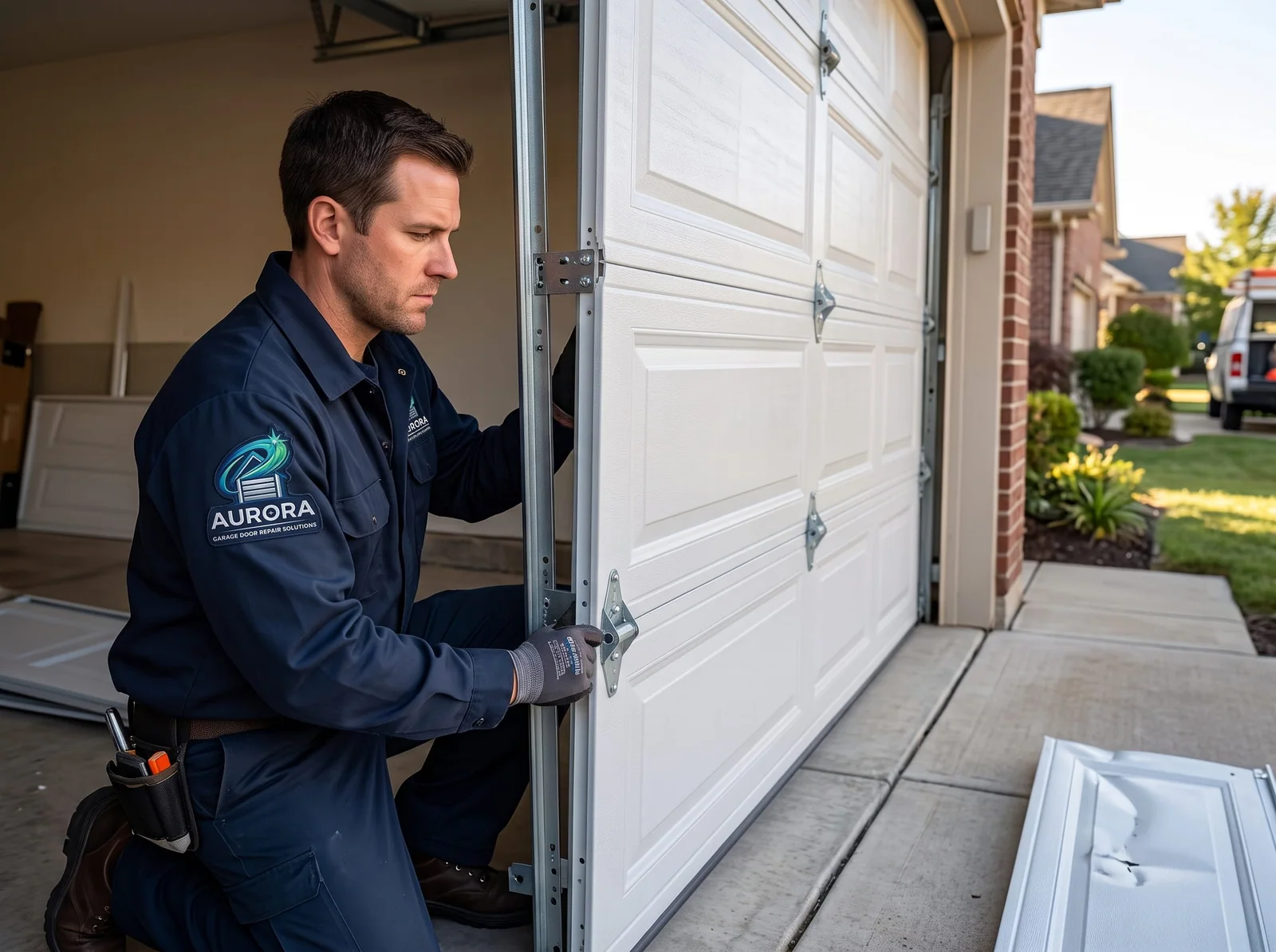
How Sectional Door Design Makes Single-Panel Replacement Possible
A sectional garage door is built from individual horizontal panels, each hinged to the sections above and below it and connected on each side to rollers that ride in the vertical tracks. This modular design, built around construction standards documented by industry groups like DASMA, is what makes single-panel replacement possible in the first place. A technician can remove the hinges and roller brackets holding one damaged section, unbolt it from its neighbors, and set a new section in its place without dismantling the tracks, springs, or opener.
Framed honestly, that usually means less time on site and less material involved than a full door replacement, since the rest of the sections, the weatherstripping, and the existing hardware all stay in place. It isn't automatically the cheaper or faster option in every case, though — sourcing the right replacement panel and getting the match right can add time, and we'll walk through both approaches with you before committing to one.
The Challenge of Matching Panel Color, Texture, and Profile
Here's the part of panel replacement we'd rather explain upfront than have you discover later: an exact match isn't always possible, especially on an older door. Manufacturers change panel profiles, embossing patterns, and paint formulations over time, and even the same product line can shift slightly between production runs, plus years of sun exposure fade an existing panel in a way a factory-fresh one hasn't experienced yet.
If your door's exact model has been discontinued — which happens more often than most homeowners expect on doors ten or more years old — we may need to source the closest available match rather than an identical one. In some cases that's nearly invisible once installed. In others, particularly with wood-grain textures or less common colors, you'll notice a difference between the new panel and the rest of the door, at least until it weathers in over a season or two. We'd rather tell you that going in than have it surprise you afterward. If you're trying to decide between a panel swap and a new door for your specific situation, our post on repairing versus replacing a damaged panel walks through the tradeoffs in more detail.
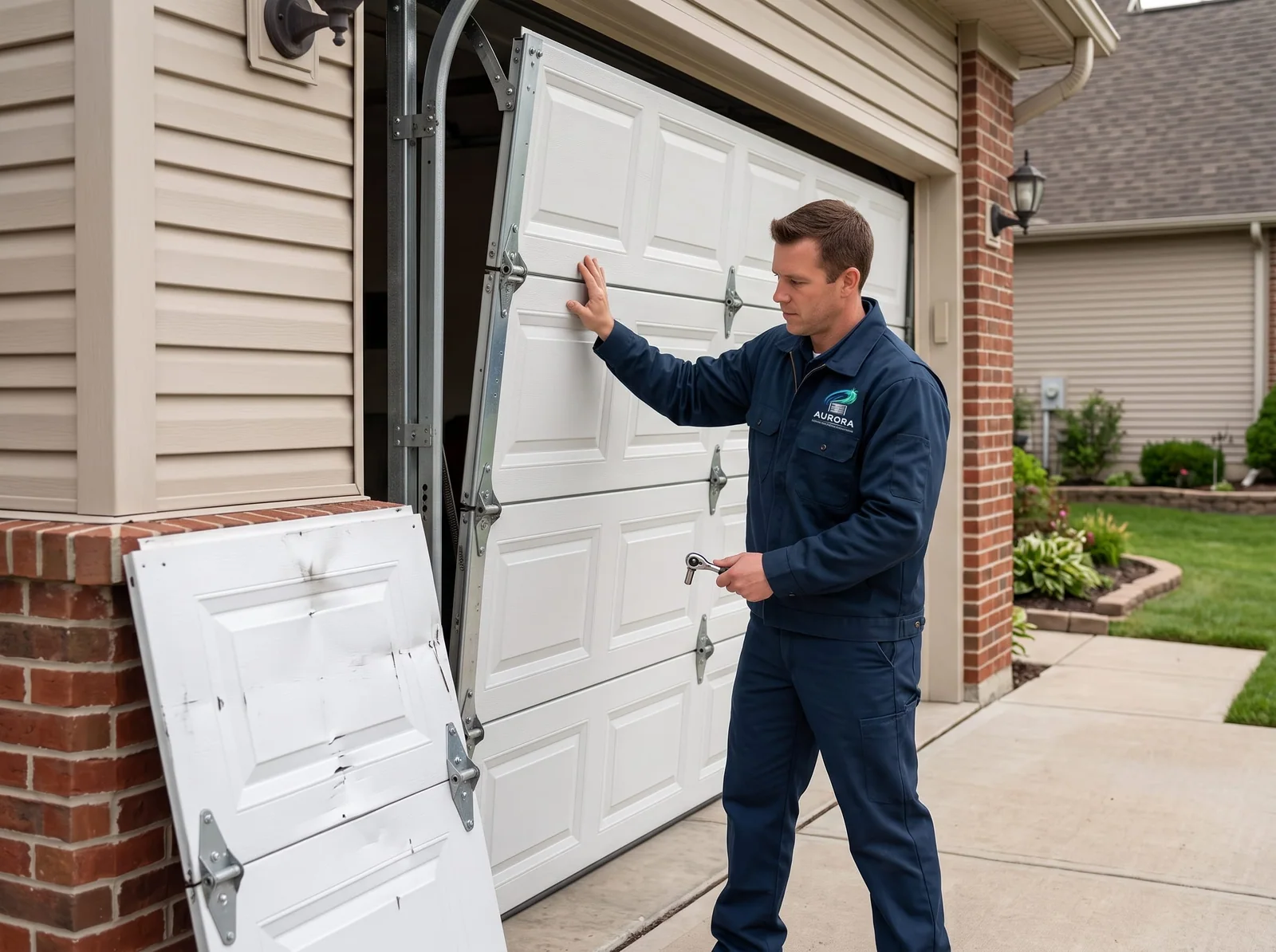
Why DIY Panel Swaps Are Riskier Than They Look
Garage door panels are heavier and more awkward than they look, and the hardware holding them in place carries more tension than most homeowners expect. Removing the wrong hinge or bracket while the door is closed can let an unsupported section shift or drop, and doors with a spring anchored near the section being replaced carry additional risk if that spring is still under load. Getting the panel misaligned by even a small amount can also throw off how the rollers ride in the track, leading to binding or a door that runs off-track shortly after the repair.
We take that responsibility seriously on every panel job — following installation practices consistent with guidance from trade groups like the International Door Association, checking spring tension, supporting the door properly during the swap, and re-testing balance and the safety sensors before we call the job finished.
When Full Door Replacement Makes More Sense Than a Single Panel
Panel replacement stops making sense in a few situations. If two or more panels on the same door are damaged, or the damage runs across a large section of the door rather than one panel, the labor and material involved in replacing several sections can approach what a full door replacement would take. If your door's exact model is long discontinued and even a close-match panel would stand out noticeably against faded, older sections, that's worth weighing against a fresh door where every panel matches from day one.
Age matters too. A door that's already 20-plus years old, showing wear across multiple panels, or running an outdated spring or opener system may be a better candidate for full garage door replacement than for patching one section at a time. We'll tell you honestly which situation you're in rather than defaulting to whichever job is bigger.
Why Aurora Homeowners Choose Us for Panel Replacement
Ryan Delaney and the team at Aurora Garage Door Repair Solutions have been repairing and replacing garage door panels for homeowners throughout Aurora, including West Aurora, since 2009. We inspect the damage in person, explain honestly whether a single panel will match and function the way you need it to, and give you an upfront quote before any work starts — no pressure toward the bigger job if a panel swap will do the job right.
We're locally owned, our technicians are insured and background-checked, and we offer same-day appointments where possible for panel damage that's affecting how the door operates day to day. Contact us to schedule an inspection.
What to Expect When You Call
On-Site Inspection
We examine the damaged panel, the surrounding hinges and rollers, and the door's overall condition to confirm panel replacement is the right fit.
Panel Sourcing and Match Check
We identify the door's manufacturer and model where possible, source the closest matching panel, and explain any expected color or texture difference upfront.
Safe Panel Removal
We support the door and account for spring tension before unbolting the damaged section from its hinges and roller brackets.
Installation and Alignment
The new panel is hinged and bolted into place, then checked against the track for smooth, even rolling.
Balance and Safety Test
We run the door through a full cycle, checking spring balance, roller alignment, and safety sensor function before finishing.
Garage Door Panel Replacement in Aurora, IL FAQs
Can I replace just one panel on my garage door?
Yes, in most cases. Sectional garage doors are built from individual hinged panels, so a technician can typically remove and replace just the damaged section without touching the rest of the door.
Will the new panel match the rest of my door?
It depends on the door's age and whether the exact model is still available. On newer doors a match is usually close to seamless, while older or discontinued models may show a slight difference in color or texture that we'll point out before starting work.
How much does garage door panel replacement cost?
Cost depends on the door's brand, how available a matching panel is, and how much disassembly the job requires, so we provide a free, upfront quote after inspecting the door rather than quoting blind over the phone.
Can I replace a garage door panel myself?
We don't recommend it. Panels are heavier than they look, nearby hardware can be under spring tension, and a misaligned panel can cause the door to bind or run off-track.
How long does panel replacement take?
A straightforward single-panel swap is often a same-visit job once the panel is on hand, though sourcing a matching panel for an older or discontinued model can add time before the appointment.
What causes garage door panels to get damaged?
The most common causes we see in Aurora are vehicles backing into the door, hail and storm impact, and age-related warping or rust on older panels.
Is a dented panel dangerous, or just cosmetic?
It depends on the depth and location. A shallow dent is often cosmetic, but a dent that bends the panel's edge near a hinge or roller can affect how the door tracks and should be inspected.
Need Panel Replacement in Aurora, IL?
Aurora Garage Door Repair Solutions is ready to help — call now for a free, upfront quote.