
Should You Repair or Replace a Damaged Garage Door Panel?
A dented or cracked section doesn't always mean a new door. Here's how sectional construction makes single-panel repairs possible, when they're the right call, and when replacing the whole door actually saves you money.
How a Sectional Door Is Actually Built
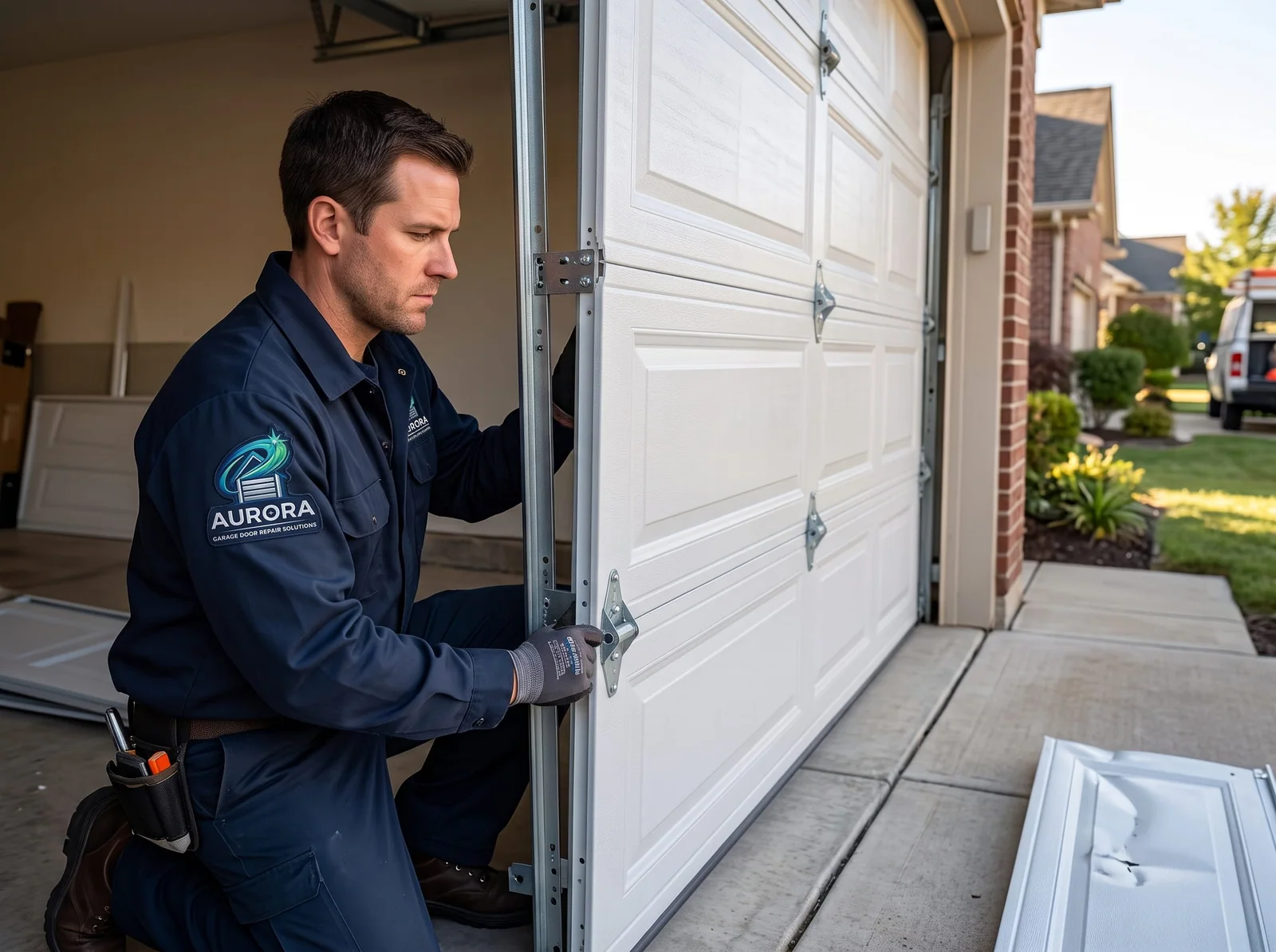
Most homeowners think of a garage door as one solid slab, which is why a baseball, a snow blower, or a backed-into bumper can feel like it just ruined the whole door. It didn't. Nearly every residential garage door installed in the Aurora area over the last few decades is a sectional door, meaning it's built from several individual horizontal panels — usually four to six depending on the door's height — stacked and hinged together so the door can curve up and over into the ceiling track instead of swinging out like an old-style single-panel door.
Each of those horizontal sections is its own separate piece, attached to its neighbors with hinges at the joints and to the roller carriages at each end. That construction detail matters more than most people realize, because it means damage to one section doesn't automatically compromise the ones above and below it. If a car clips the bottom panel backing out of the driveway, the top three panels are frequently untouched and structurally fine. The door can, in a lot of cases, come apart at those hinge points and have just the damaged section swapped out for a new one, without touching the rest of the door.
This is different from how the door's springs, cables, and opener work, which are whole-door systems. But the skin of the door — the part you actually see and that took the hit — is modular by design. That's the whole reason panel replacement exists as a repair option at all.
When Replacing One Panel Makes Sense
Panel replacement is the right call in a fairly specific set of circumstances, and it's worth being honest about what those are rather than treating it as the default answer to every ding. The scenario where it works best looks like this: one panel has an isolated dent, crack, or puncture, the rest of the door is structurally sound, the hardware (hinges, rollers, track) is in decent shape, and the door itself isn't old enough that the manufacturer has moved on to different panel profiles.
A few examples we see regularly around Aurora and the Fox Valley:
- A vehicle backs into the bottom section, denting or bowing it, while the upper panels and opener system are unaffected.
- A wind-driven tree branch or storm debris punctures or cracks a single panel during a summer storm, common enough here given how exposed most driveways are.
- A basketball, errant lawn equipment, or ladder impact leaves a dent in one section without affecting the door's alignment.
- Rust or rot has developed in one panel near ground level (more common on older steel or wood doors that sit close to a slab that holds moisture) but the rest of the door is dry and intact.
In these cases, replacing just the affected section is usually faster and less expensive than a full door swap, and it keeps a door that's otherwise doing its job in service. If the door is under roughly ten years old and from a manufacturer whose panel styles haven't changed much, matching is often straightforward and the repair is close to invisible once it's painted to match, if paint-matching is needed at all.
The Matching Problem: Why We Won't Promise a Perfect Blend
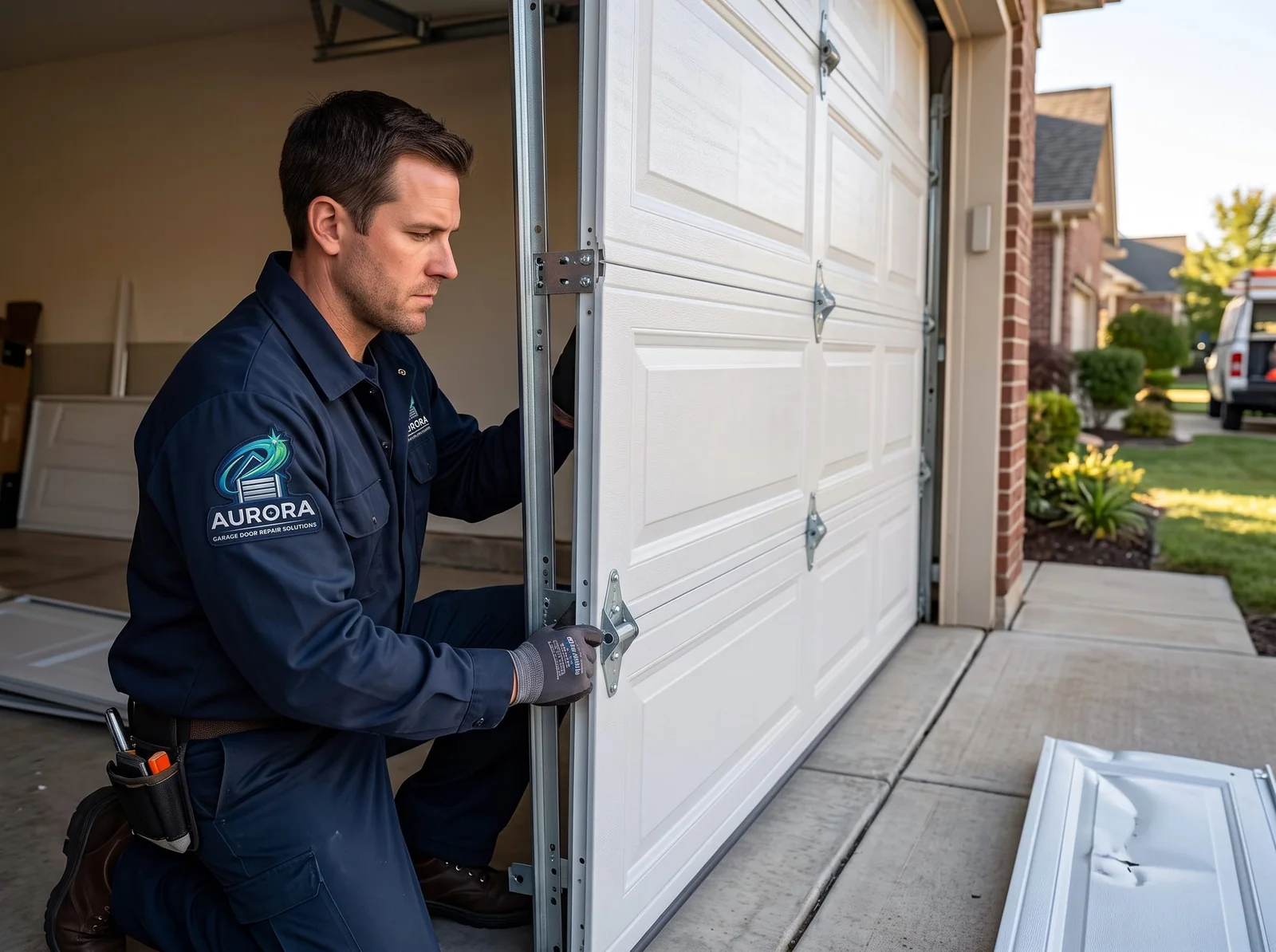
Here's the part a lot of repair companies gloss over, and we'd rather tell you upfront: matching an existing panel isn't always possible, and pretending otherwise sets homeowners up for a disappointing result. Garage door manufacturers change their panel profiles, embossing patterns, and color offerings over time. A door that's twelve or fifteen years old may have a wood-grain texture, panel groove pattern, or color that the manufacturer has since discontinued or altered slightly in a product refresh.
When that happens, a replacement panel can be close — same general steel gauge, same approximate color family — without being identical. Texture depth can be subtly different. Whites and beiges in particular vary between manufacturers and even between production runs years apart, since factory paint formulations shift. Even when a panel comes from the original manufacturer and the model is still in production, sun fading on the existing panels over a decade of Illinois summers means a brand-new section will almost always look slightly newer than its neighbors, at least until it weathers for a season or two.
We check for an exact or close match before recommending a panel swap, and we'll tell you plainly if we think the result will be noticeable. Some homeowners are completely fine with a slightly mismatched panel on a door that faces a side yard or is otherwise not a focal point of the house. Others decide that a visible seam in color or texture on a door facing the street bothers them enough that full replacement is worth it instead. Both are reasonable decisions — the point is you should make that call with accurate information, not find out after the new panel is installed.
When Full Door Replacement Is the Smarter Call
There are situations where recommending a panel repair would be doing you a disservice, and we'll say so directly instead of running the meter on a patch job that won't hold up. Full replacement generally makes more sense when:
- More than one panel is damaged. Once you're replacing two or three sections out of four or five, the cost difference between multiple panel replacements and a new door narrows quickly, and a new door comes with fresh hardware and a consistent finish throughout.
- The door is old enough that matching isn't realistic. If a manufacturer has discontinued a model line entirely, sourcing a compatible panel can become genuinely difficult or require a special order with a long lead time, at which point full replacement is often both faster and more practical.
- The door has other chronic issues. A door that's needed frequent roller, cable, or hinge repairs, or one with thin, poorly insulated steel skins that never kept the garage comfortable through an Aurora winter, is a door where a panel repair just delays a bigger decision. Insulation matters more here than a lot of homeowners expect — older uninsulated doors let a surprising amount of cold into an attached garage, and if yours shares a wall with living space, that's worth factoring in.
- The damage affects the door's structural components, not just the skin — a bent track, a cracked end stile, or damage near a hinge mounting point can indicate the impact was harder than it looks from the dent alone.
We're not going to recommend a full replacement to sell a bigger job. If a panel swap genuinely solves your problem, that's what we'll suggest. But an honest assessment sometimes points the other direction, and you deserve to hear that reasoning rather than just a price.
A Dent Isn't Always Just Cosmetic
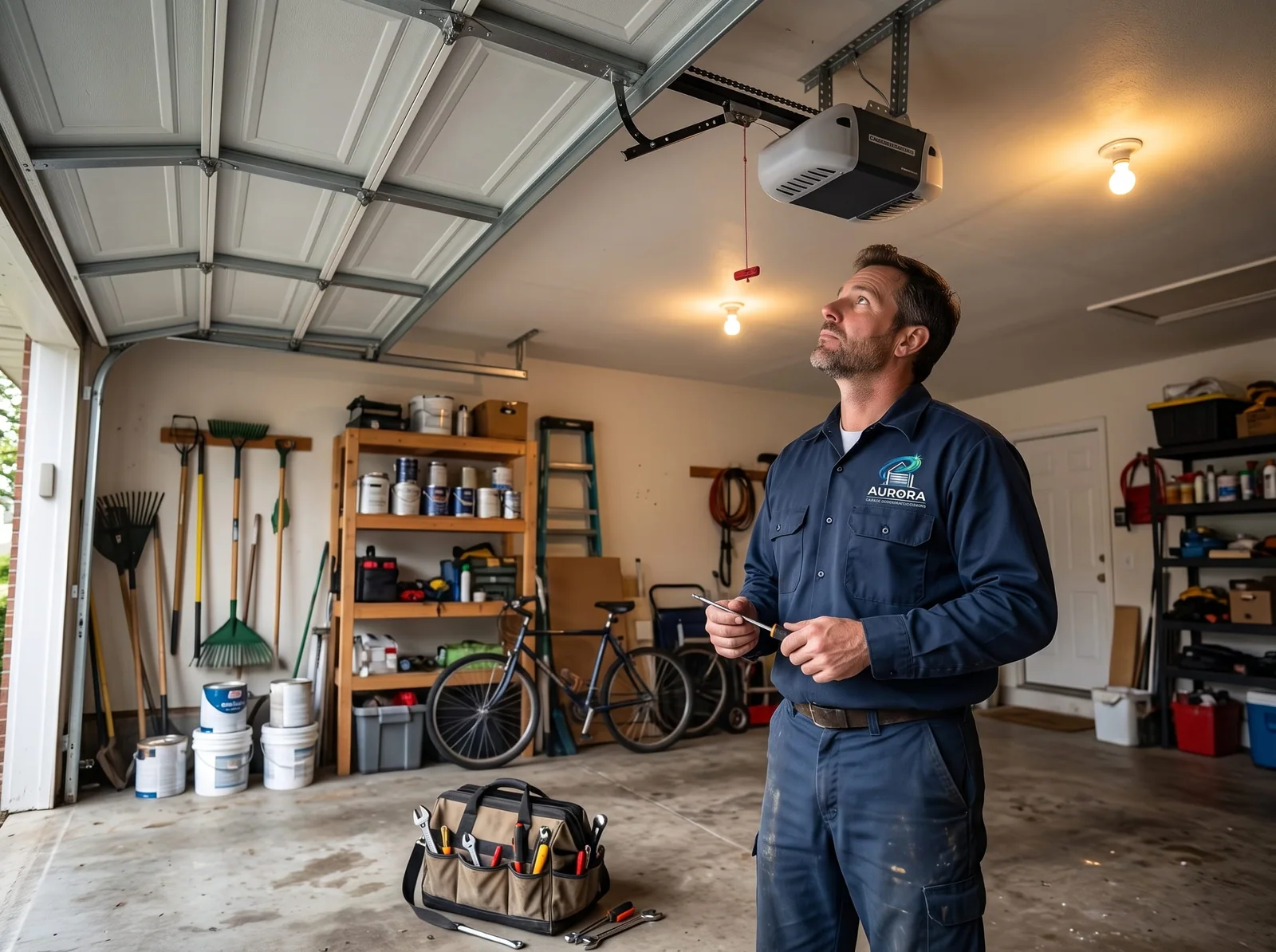
This is the part that surprises most homeowners: a dented panel can be more than an appearance issue, even when the door still opens and closes without obvious trouble. Sectional doors are engineered as a balanced system. The torsion spring (or springs, on a two-spring setup) is sized and tensioned based on the total weight of the door, and that weight is assumed to be distributed evenly panel to panel. A significant dent, especially one that bows a panel inward or bends an end stile, can shift that weight distribution slightly or create drag against the tracks that the opener has to work around.
Over time, that uneven load can accelerate wear on rollers, put extra strain on the opener's drive system, or cause a door that used to run quietly to develop new noise or hesitation at the point where it passes the damaged section. It can also mask itself well — a door can look and operate almost normally for months while the hardware absorbs the extra stress, until something like a cable or roller fails sooner than it should have.
Spring systems are engineered around cycle life and consistent load, which is part of why standards bodies like DASMA publish cycle-life testing guidance for torsion springs in the first place — the assumption baked into that testing is a door in proper working balance. A door that's out of balance because of impact damage doesn't get the cycle life the spring was rated for. This is exactly why we recommend having even "just cosmetic" panel damage looked at by a technician rather than assuming it's purely an appearance problem. It usually is. But confirming that takes a five-minute balance check, and skipping it occasionally means finding out the hard way when a spring or cable lets go under load it wasn't expecting.
What a Fair Inspection Looks Like
When we look at a damaged panel, we're checking more than the dent itself. A proper assessment covers whether the door still opens and closes at true horizontal and vertical alignment, whether the rollers in the damaged section's track are running smoothly or binding, whether the hinges at the panel's joints are still square, and whether the door balances correctly when disconnected from the opener (a door in good balance should stay roughly in place at half-open when let go manually — one that drops or shoots up usually means spring tension is off).
We also look at the door's age, the manufacturer if it's identifiable from the panel labeling or hardware stamps, and whether a matching replacement section is realistically available before we ever quote a repair. That's the upfront, honest pricing approach we've built the business around since 2009 — you get a clear picture of what's actually wrong and what your realistic options are, not just a number.
Weighing Repair Cost Against Long-Term Value
We won't give you invented dollar figures here, because the honest answer is that panel repair and full replacement costs depend on the door's size, material, insulation level, panel availability, and how much additional hardware needs attention. What we can tell you is how to think about the decision. A single-panel repair on an otherwise sound, reasonably current door is almost always the more economical near-term fix, and it's usually the right one. A door needing multiple panels, or one already showing its age in other ways — rising energy bills from poor insulation, recurring roller or track service calls, an opener working harder than it should — often costs less over a five- or ten-year horizon to replace outright than to keep patching piece by piece.
We provide a free upfront quote before any work begins, and if a panel repair is the more sensible option, that's what we'll quote. If replacement genuinely serves you better long-term, we'll explain exactly why, including the tradeoffs, so the decision is yours to make with real information rather than a sales pitch.

Ryan Delaney
Owner and lead technician at Aurora Garage Door Repair Solutions, serving Aurora, IL since 2009.
FAQs
Can just one garage door panel really be replaced, or does the whole door have to come off?
In most cases, yes — a single panel can be unhinged from its neighbors and swapped without removing the rest of the door, as long as a matching or acceptably close panel is available. The door doesn't have to come out of the track for this in typical cases.
Why can't you always match my existing garage door color exactly?
Manufacturers change paint formulations, textures, and panel profiles over time, and years of sun exposure fade existing panels unevenly. On an older or discontinued door model, a new panel can be a close match without being identical. We'll tell you honestly before the work starts if we expect a visible difference.
How do I know if my panel damage is just cosmetic or actually a bigger problem?
You generally can't tell just by looking. A dent that bows the panel inward, sits near a hinge or end stile, or coincides with new noise or hesitation when the door runs is worth a professional balance check. We check the door's alignment and spring balance as part of any panel damage assessment, even when the damage looks minor.
Is it cheaper to replace one panel or the whole door?
A single panel replacement is usually less expensive than full door replacement when only one section is affected and the door is otherwise sound. That gap narrows quickly if multiple panels are damaged, if the panel has to be special-ordered due to age, or if the door has other issues like poor insulation. We give a free upfront quote comparing both options when it's genuinely a close call.
Can I replace a garage door panel myself?
It's more involved than it looks. The panel has to be correctly sourced, the hinges and roller brackets have to transfer over cleanly, and the door's balance needs to be checked afterward since a spring system under tension is involved in disconnecting and reconnecting most sectional doors. We'd recommend having a technician handle it, particularly on any door where the springs need to be touched to get the old panel out.
How long does a panel replacement take compared to a full door replacement?
A single panel swap is typically a same-visit repair once the correct panel is on hand. Full door replacement takes longer, both because there's more to install and because the exact door style may need to be ordered ahead of the appointment.
Have a Garage Door Problem Right Now?
Skip the guesswork — call Aurora Garage Door Repair Solutions for a fast, honest diagnosis.