
Commercial Garage Door Repair in Aurora, IL
A bay or dock door that won't open or won't close stops your business, not just your morning. We repair commercial garage doors for Aurora businesses with upfront pricing and no guesswork.
- Locally owned since 2009
- Insured, background-checked techs
- Free upfront quotes
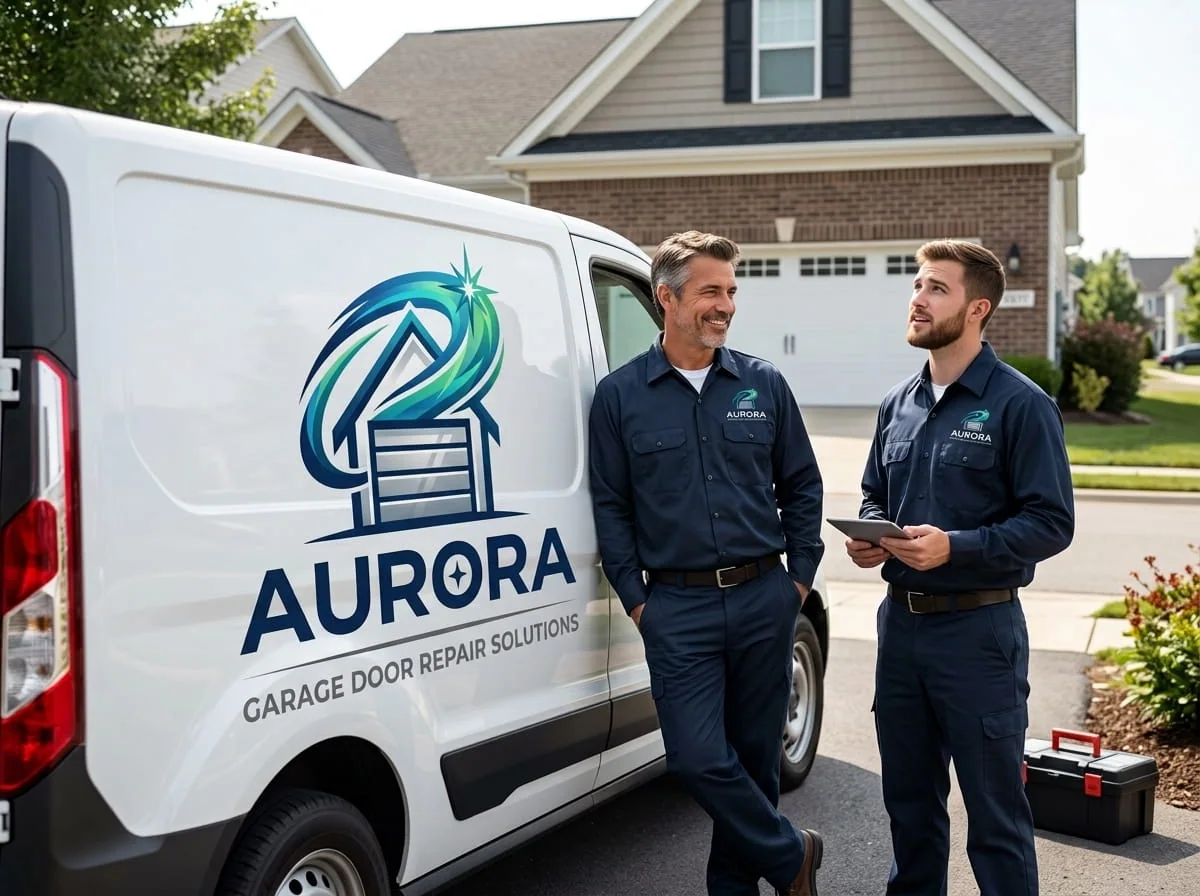
A garage door on a warehouse loading dock or a retail stockroom doesn't work like the door on a suburban Aurora garage. A residential door might cycle four or five times a day. A commercial door serving a distribution operation, an auto shop, or a retail back entrance can cycle dozens of times in a single shift, and it usually does that work with a rolling steel curtain or a heavier-gauge sectional steel door instead of a lighter residential panel. The torsion spring systems built to lift that weight are sized differently, and the openers running them are rated for duty cycles a residential unit was never built to handle.
Aurora Garage Door Repair Solutions works on these systems for small businesses, retail storefronts, and light-industrial properties across Aurora and the surrounding Fox Valley communities. Ryan Delaney and his team understand that a door problem at a business isn't just an inconvenience. A dock door stuck open leaves a building exposed to weather, pests, and anyone walking by, and it undermines whatever climate control the space depends on. A door stuck closed can stop deliveries and outbound trucks cold until it's fixed. Neither is something a business owner wants to sit with for days waiting on a callback.
Because commercial doors run harder, they wear differently too. Torsion springs are rated in cycles, and a spring under commercial-duty use reaches the end of that rated life sooner than one on a home garage. The gears and drive components inside a commercial-grade opener wear the same way. Catching that wear on a schedule, instead of reacting after a door fails mid-shift, is usually the difference between a planned service visit and an unplanned closure.
How Commercial Garage Doors Differ From Residential Systems
The core difference is duty cycle. A homeowner's garage door might open and close a handful of times before dinner. A commercial door on a light-industrial building or retail loading area can run through that many cycles before the morning delivery truck even leaves the dock. That difference changes what has to be built into the door and everything that operates it.
- Rolling steel doors and heavier-gauge sectional steel doors are common on warehouses and light-industrial buildings around Aurora because they hold up to frequent use and impact risk better than residential-weight panels.
- Torsion spring systems on commercial doors are sized for the added weight of steel construction and for far more open-close cycles over their service life than a residential spring sees.
- Commercial openers are built with higher-cycle motors and gearing rated for continuous or near-continuous daily use, not the occasional trip most residential openers are designed around.
None of this makes a commercial system indestructible. It means the system is engineered for a heavier workload, and repairs have to account for that workload instead of treating a commercial door like an oversized residential one.
Signs Your Commercial Door Needs Service
Commercial doors tend to give warning before they fail outright, if someone's paying attention during the daily routine of opening up or closing down.
- The door hesitates, reverses, or struggles partway through a cycle, especially during the first few uses of the day.
- You hear grinding, popping, or a loud creak from the spring system, often a sign a spring is nearing the end of its cycle life.
- The opener runs longer or louder than usual, or the chain or belt seems to labor before the door starts moving.
- The door sits crooked, binds in the tracks, or one side visibly moves faster than the other, which shows up more obviously on wider commercial doors under uneven tension.
- Weatherstripping or bottom seals are torn or missing at a dock entrance, letting in drafts, pests, or water.
Any one of these on its own might not stop operations today. Left alone for a few weeks, they tend to end in a door that won't move at all, usually at an inconvenient moment.
What Downtime Actually Costs Your Business
A door failure at a business creates two very different problems depending on which way the door fails, and both eat into time and attention an owner would rather spend elsewhere.
A door stuck open is a security and building-envelope problem. An open loading dock or service bay leaves inventory, equipment, or a workspace exposed to weather, temperature swings, and anyone who walks up to the opening. For a business trying to hold a steady interior temperature, an open door overnight or over a weekend is not a minor issue.
A door stuck closed is an operations problem. Deliveries can't come in, outbound trucks can't load, and staff may not be able to move vehicles or equipment until the door is repaired. Depending on the business, that can mean rescheduling suppliers, delaying a job, or turning away a truck that's already sitting in the lot.
We won't put a dollar figure on what an hour of downtime costs your business, because that number is different for every business and isn't ours to invent. What we can say is that most commercial customers we work with would rather schedule a repair, or better, catch the problem before it becomes one, than absorb an unplanned closure. That's part of why we offer fast response and same-day appointments where possible for commercial calls.
The Case for Scheduled Commercial Maintenance
Residential customers can sometimes wait until a door fails before calling. That's a harder position for a business to be in, because a failed door during business hours means lost operating time, not just an inconvenience at home. A scheduled maintenance visit is built to catch the kind of wear that leads to a mid-shift failure before it happens.
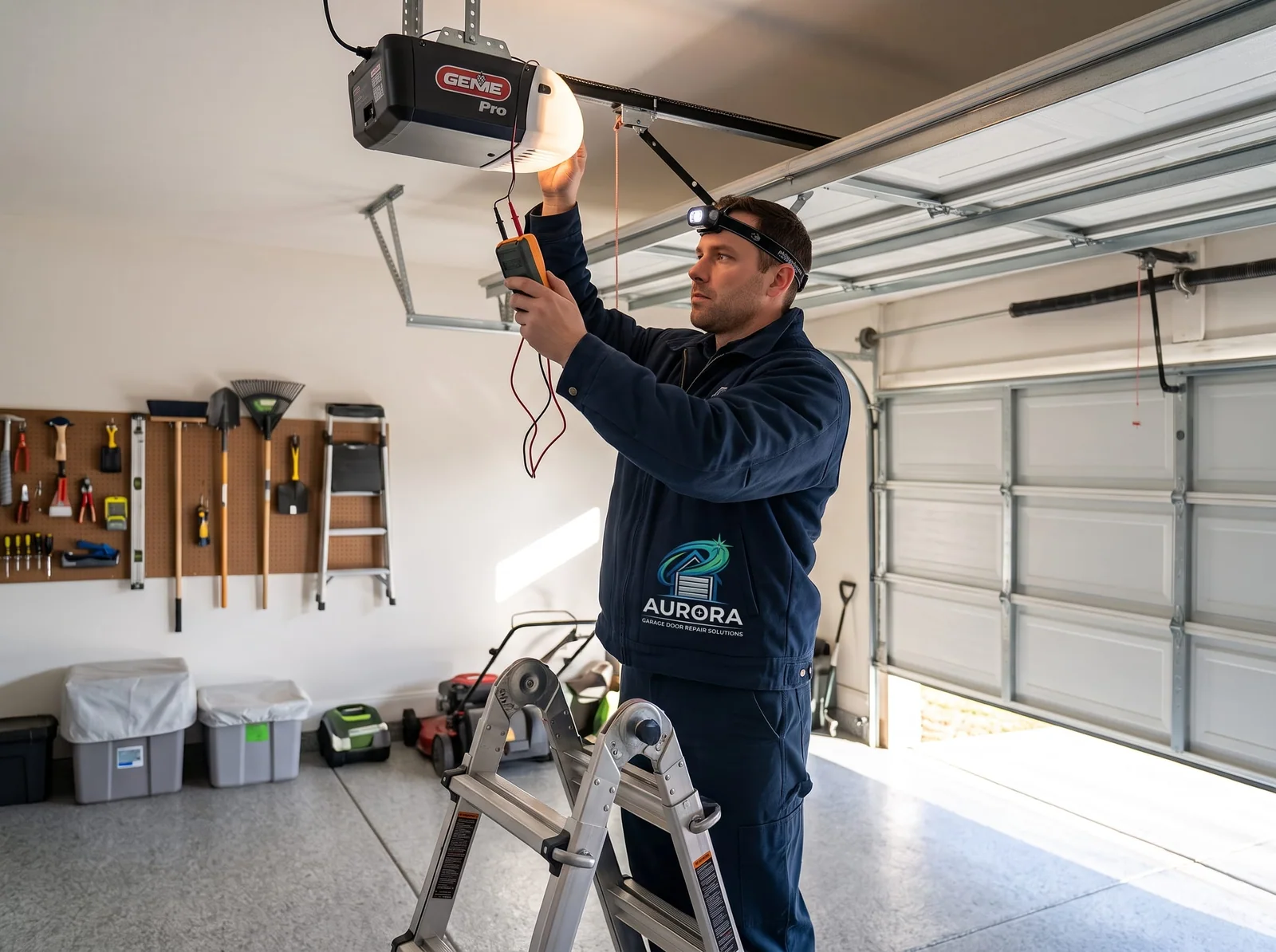
Two components matter most on a commercial system. Torsion springs are rated for a set number of cycles, and a spring on a high-cycle commercial door reaches the end of that count much sooner than a residential spring would. Opener gears wear the same way: internal gearing that runs dozens of times a day accumulates wear on the teeth and bearings faster than a gear set that runs a handful of times, and a worn gear tends to strip or seize with little warning.
A maintenance visit checks spring tension and cycle wear, inspects opener gearing and drive components, tests rollers and tracks under load, and confirms safety reversal is working correctly. Catching a spring near the end of its rated life, or an opener gear showing early wear, means scheduling that replacement on your timeline instead of the door's.
Why DIY Repair Is Riskier on Commercial Doors
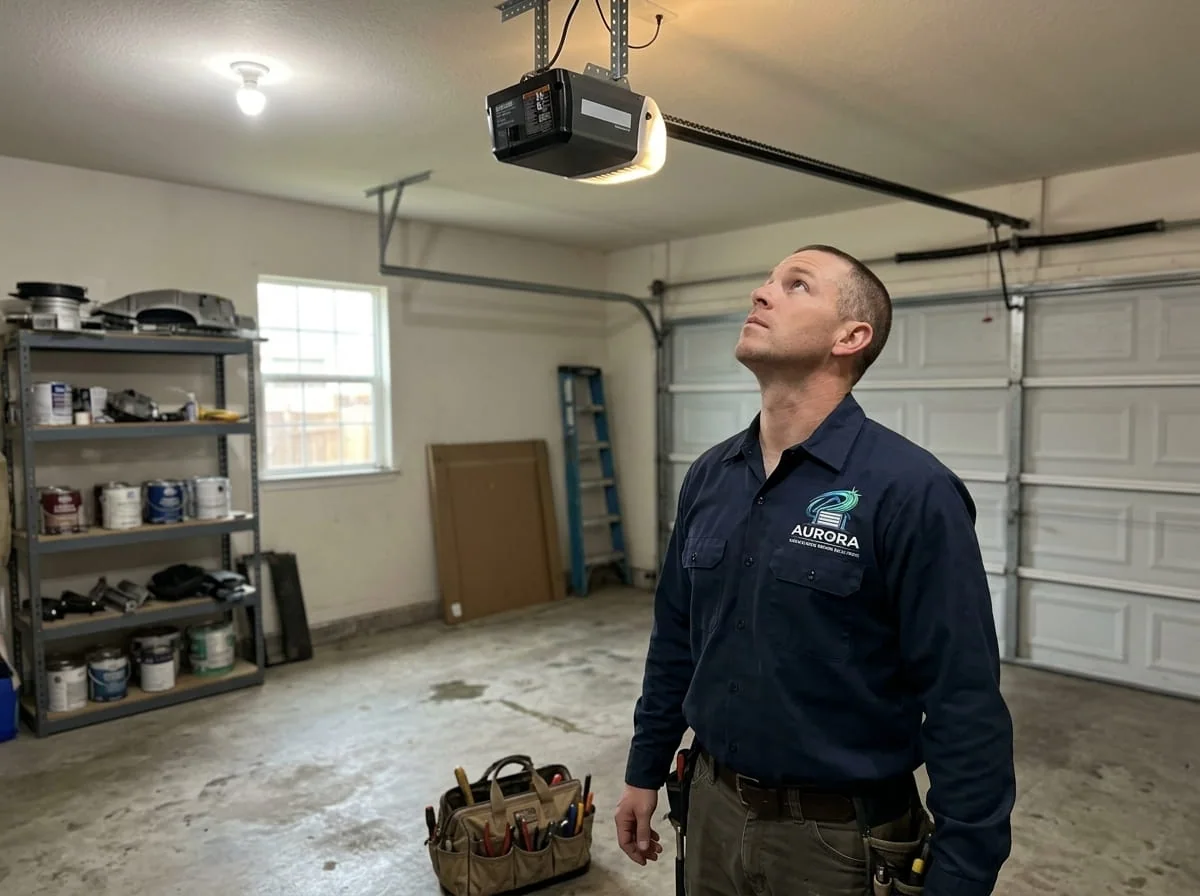
Commercial torsion springs carry more stored tension than residential springs, because they're lifting heavier steel doors. That added tension makes an already dangerous repair more dangerous. A spring that lets go while someone without the right winding bars and training is working on it can cause serious injury, and the heavier springs on commercial systems don't lower that risk, they raise it.
Rolling steel doors add another layer most residential doors don't have. Their spring and drum systems are configured differently from a sectional door's torsion setup, and the barrel assembly at the top of a rolling door holds meaningful tension across its full width. Working on that system without the right equipment isn't a reasonable maintenance shortcut, even for a hands-on facilities manager.
How Illinois Weather Adds Wear to Commercial Doors
Aurora's cold winters affect commercial doors the same way they affect residential ones, just at a larger scale. When temperatures drop toward the average January low near 16°F, torsion springs contract and stiffen, and a spring already near the end of its cycle life is more likely to snap on a cold morning than a mild one. Metal tracks contract too, which can bind a heavier commercial door more noticeably than a lighter residential panel.
Freeze-thaw cycles through an Aurora winter can also shift a concrete apron or dock slab slightly, which affects track alignment on a rolling or sectional door over a season. If a commercial door has started sticking, binding, or moving unevenly specifically since the weather turned cold, the tracks and spring system are the first things worth having checked.
Who We Serve Around Aurora
Aurora Garage Door Repair Solutions services small businesses, retail storefronts, and light-industrial properties throughout Aurora and the surrounding Fox Valley communities. That includes strip mall bay doors, auto shop service doors, warehouse and distribution dock doors, and back-of-house entrances at retail locations.
We offer the same upfront, honest pricing and free quotes for commercial work that we do for residential calls, and our technicians are insured and background-checked. We know a business repair often can't wait for a convenient day on our schedule, which is why we offer same-day appointments where possible and prioritize commercial calls that are actively affecting operations.
What to Expect When You Call
Call and describe the issue
Tell us whether the door is stuck open or stuck closed and how it's affecting operations, so we can prioritize the visit accordingly.
On-site diagnostic
The technician inspects the door type, torsion spring system, opener, and tracks to identify the cause, not just the symptom.
Free upfront quote
You get a clear explanation of what's failing and a price before any repair work starts.
Repair or scheduled maintenance
We complete the repair, or perform a full maintenance check on spring tension, opener gearing, and tracks, in the same visit where possible.
Full cycle test
We run the door through multiple cycles under normal load and confirm safety reversal before we consider the job done.
Commercial Garage Door Repair in Aurora, IL FAQs
How much does commercial garage door repair cost?
Cost depends on the door type (rolling steel or sectional steel), the size of the torsion spring system, whether the opener needs gear or motor work, and how extensive the damage is. We provide a free upfront quote after inspecting the door so you know the price before any work begins.
Can I do commercial garage door maintenance myself?
Basic visual checks, like watching for fraying, rust, or unusual noise, are fine for staff to do between service visits. Spring tension work and opener gear service involve stored energy and moving parts that are safer left to a trained technician, especially on heavier commercial systems.
How often should a commercial garage door be serviced?
It depends on how many cycles the door runs per day. A door that opens and closes dozens of times a shift wears faster than a residential door and generally benefits from more frequent professional inspection so spring and opener wear get caught before they cause a failure.
What's the difference between a commercial and residential garage door opener?
Commercial openers are built with higher-cycle motors and gearing meant for frequent daily use throughout a business day, while most residential openers are designed around a handful of cycles per day. Using a residential-grade opener on a high-traffic commercial door tends to wear it out quickly.
Is emergency service available for a stuck commercial garage door?
We prioritize same-day appointments where possible for commercial calls that are affecting deliveries or security, and we return after-hours calls first thing. We don't offer round-the-clock service, but we treat an operational door failure as a priority.
How long does a commercial garage door repair take?
Most single-issue repairs, like a spring replacement or opener service, are completed in a single visit. A repair involving track realignment or panel damage on a rolling steel door can take longer depending on the extent of the damage.
Need Commercial Garage Doors in Aurora, IL?
Aurora Garage Door Repair Solutions is ready to help — call now for a free, upfront quote.