
Garage Door Opener Repair in Aurora, IL
A door that won't open on command usually isn't a door problem at all. Our technicians pinpoint the actual cause and fix it the same day where possible.
- Locally owned since 2009
- Insured, background-checked techs
- Free upfront quotes
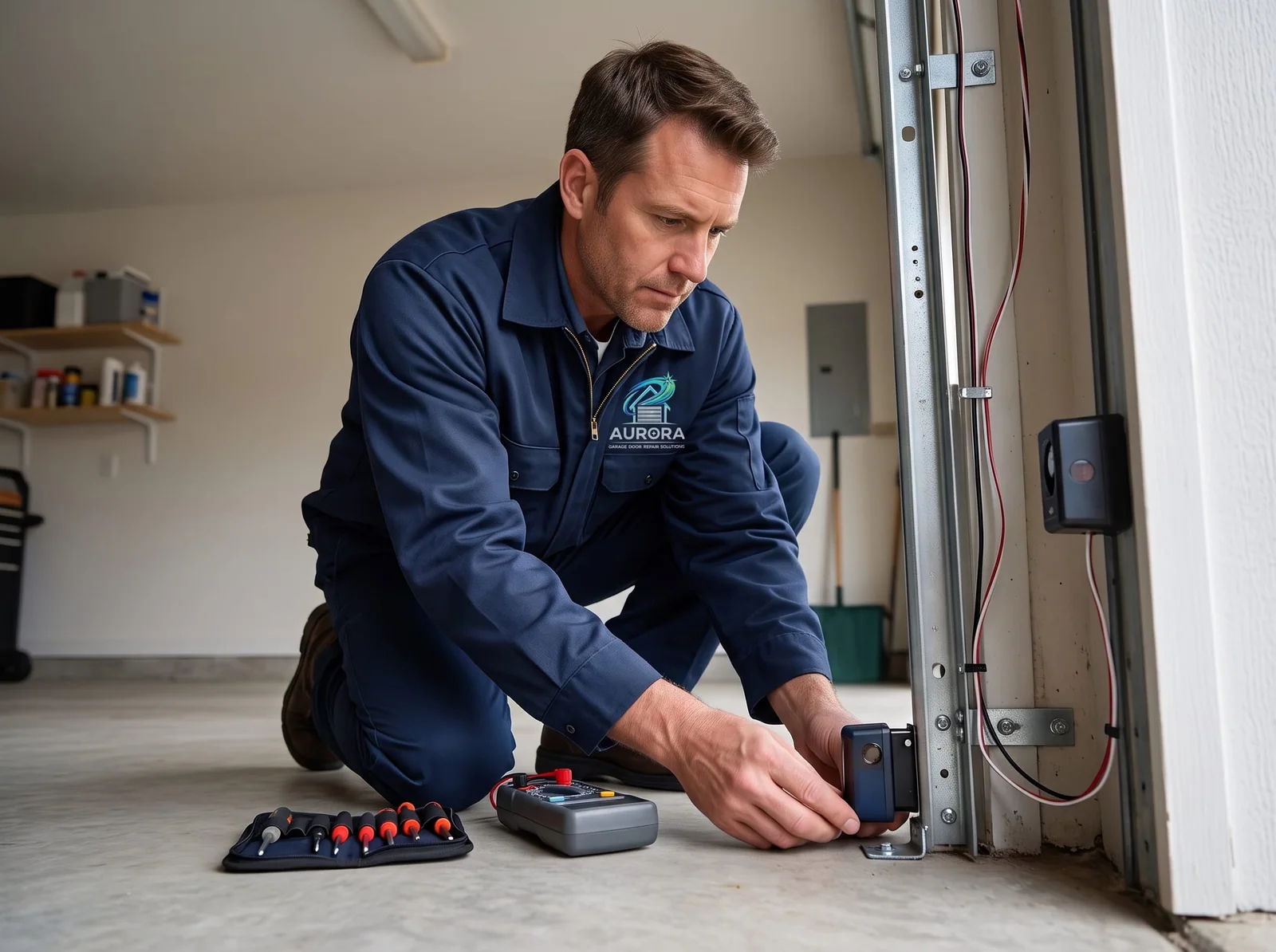
When a garage door won't respond to the remote, reverses without reason, or the motor hums but the door never moves, most homeowners assume the worst. In our experience across 17 years of service calls in Aurora, opener problems are often narrower than they look: a misaligned sensor, a dead backup battery, a stripped internal gear, or a trolley that's accidentally been pulled into manual release mode. Aurora Garage Door Repair Solutions diagnoses the actual failure point before recommending any repair, so you're not paying to replace a unit that only needed a sensor realigned.
Aurora's climate is part of the story. Our winters regularly drop into the teens overnight, and the grease inside an opener's gearbox thickens in that cold, which forces the motor to work harder and can trip its internal overload protection or accelerate gear wear over a few seasons. Openers installed in an unheated garage or on an exterior wall take the brunt of it. We see a seasonal uptick in motor and gear complaints every year once temperatures fall, which is useful context for homeowners trying to figure out whether a repair now will hold through the winter.
This page covers the opener problems we're called out for most often, which of those a homeowner can safely rule out before picking up the phone, and which ones involve the motor housing or circuit board and are not worth opening up yourself.
Common Signs Your Garage Door Opener Needs Repair
Opener failures tend to show up as one of a handful of repeatable patterns. Knowing which one you're dealing with helps our technician arrive with the right parts already in the van.
- Motor won't run at all. No hum, no light, nothing happens when you press the button. This points to a power issue, a tripped circuit, or a failed circuit board rather than the drive mechanism itself.
- Remote or keypad doesn't respond. The wall button works but the remote doesn't, or neither does. Often batteries or a lost programming sync, occasionally a failing receiver inside the unit.
- Door reverses immediately after starting to close. The opener's force or travel-limit settings have drifted, or the safety sensors are misaligned and the unit thinks something is blocking the door.
- Safety sensors won't stay aligned or their lights flicker. A bumped sensor bracket, a loose wire, or sunlight hitting the lens can all cause this.
- Grinding or rattling from the motor unit. Usually a worn drive gear, a chain or belt that's lost tension, or a failing bearing inside the housing.
- The motor runs but the door doesn't move. This is one of the most common calls we get, and it's frequently a trolley that's been disengaged into manual release mode, sometimes by accident during a power outage or after someone pulled the emergency cord.
Chain, Belt, Screw Drive, and Wall-Mount Openers: Different Systems, Different Failure Points
Not every opener fails the same way, because not every opener works the same way. We service the full range of drive mechanisms found on Aurora garages, and knowing which one you have narrows down the likely problem before we even arrive.
- Chain drive openers use a metal chain to pull the trolley along a rail. They're common on older installs and tend to develop chain slack, sprocket wear, or a chain that's jumped its track.
- Belt drive openers use a reinforced rubber belt instead of a chain. They run quieter but the belt itself can stretch, fray, or slip off its pulley over years of use.
- Screw drive openers move the trolley along a threaded steel rod. These rely on the rod staying properly lubricated; dried-out or gummed-up lubricant is a frequent cause of a slow or straining screw drive unit.
- Wall-mount jackshaft openers mount beside the door and turn the torsion spring shaft directly instead of pulling a trolley across the ceiling. They free up ceiling space but their failures usually trace back to the coupler or gearbox at the shaft connection.
We don't push a particular type or brand. We work with what's already installed on your garage and repair it when a repair makes sense.
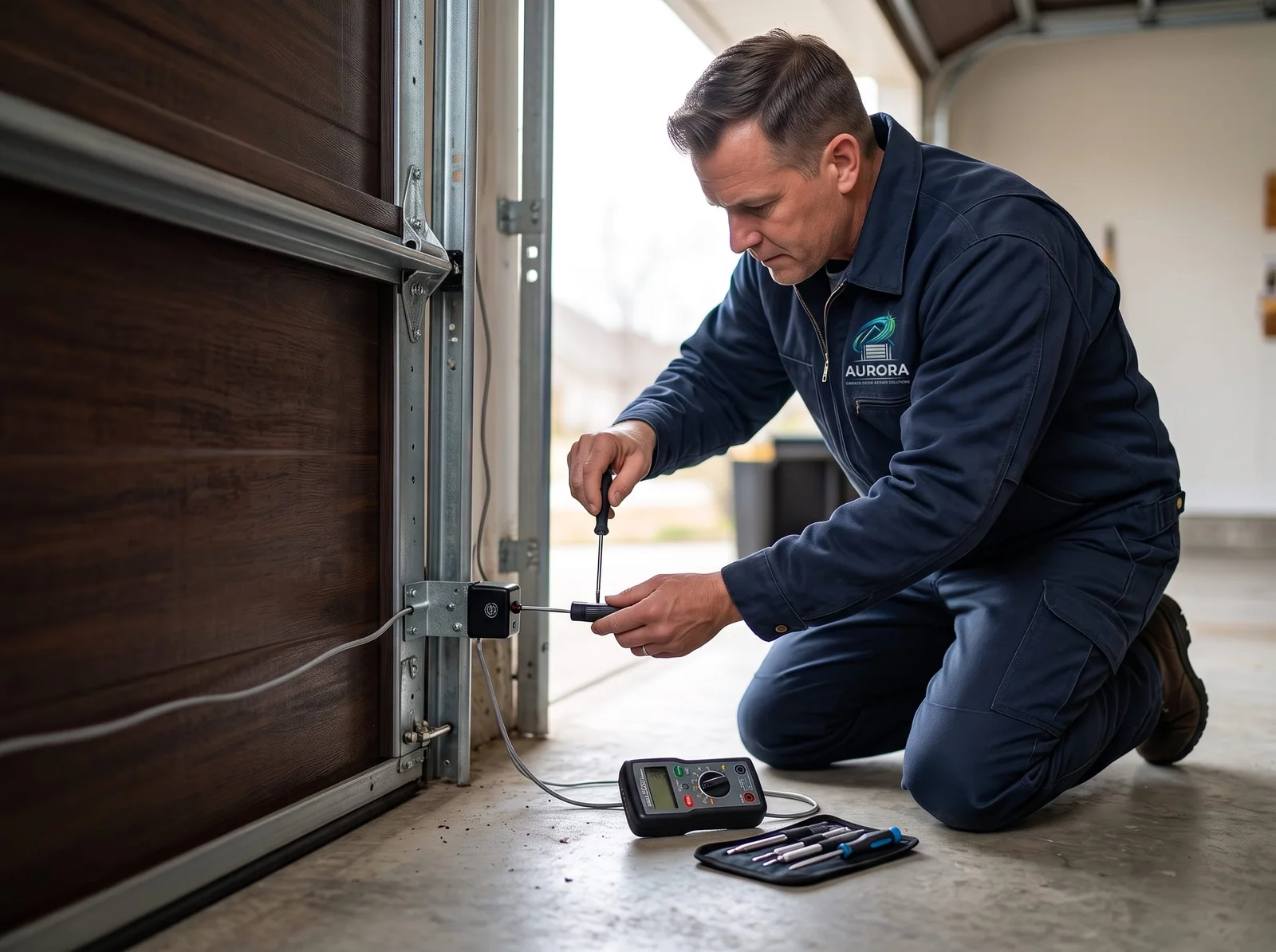
Photo-Eye Safety Sensors: A Required Safety Feature, Not Optional Equipment
Every modern residential garage door opener is built to include a pair of photo-eye safety sensors, mounted a few inches off the floor on each side of the door track. They project an invisible beam across the doorway, and if that beam is broken while the door is closing, the opener has to stop and reverse instead of continuing down. This isn't an added feature you can opt out of; it's been a standard, required safety function on residential opener units for decades, put in place specifically to prevent the door from closing on a person, pet, or object in its path. The Consumer Product Safety Commission has published extensive guidance on garage door and opener entrapment hazards that shaped this standard.
When sensors are misaligned, dirty, or blocked, the opener can behave erratically: reversing for no visible reason, refusing to close at all, or in rare cases failing to reverse when it should. We never disable, bypass, or remove sensor function to "solve" a reversing problem. If your door is reversing, the right fix is finding out why the sensors are triggering, not defeating the safety feature that's doing its job.
What You Can Safely Check Before Calling
A fair number of service calls turn out to be something a homeowner could have resolved in five minutes. Before you assume the worst, it's worth checking these:
- Sensor alignment and obstruction. Look at the two small sensor eyes near the bottom of each track. Their indicator lights should be solid, not blinking. Wipe off dust or cobwebs, nudge them gently to face each other directly, and clear anything sitting in the beam's path, including a leaf or a stray tool.
- Power to the unit. Confirm the opener is plugged in, check whether the outlet is on a GFCI circuit that may have tripped, and check your breaker panel. A unit with no lights and no sound is often a power issue, not a mechanical one.
- Remote and keypad batteries. A weak remote battery is one of the most common reasons an opener stops responding to the handheld transmitter while the wall button still works fine.
If those checks don't resolve it, stop there. Don't climb up and start adjusting force settings, tension, or spring-related hardware near the opener; that's where DIY attempts turn a simple call into an injury or a much larger repair.
When an Opener Problem Needs a Professional
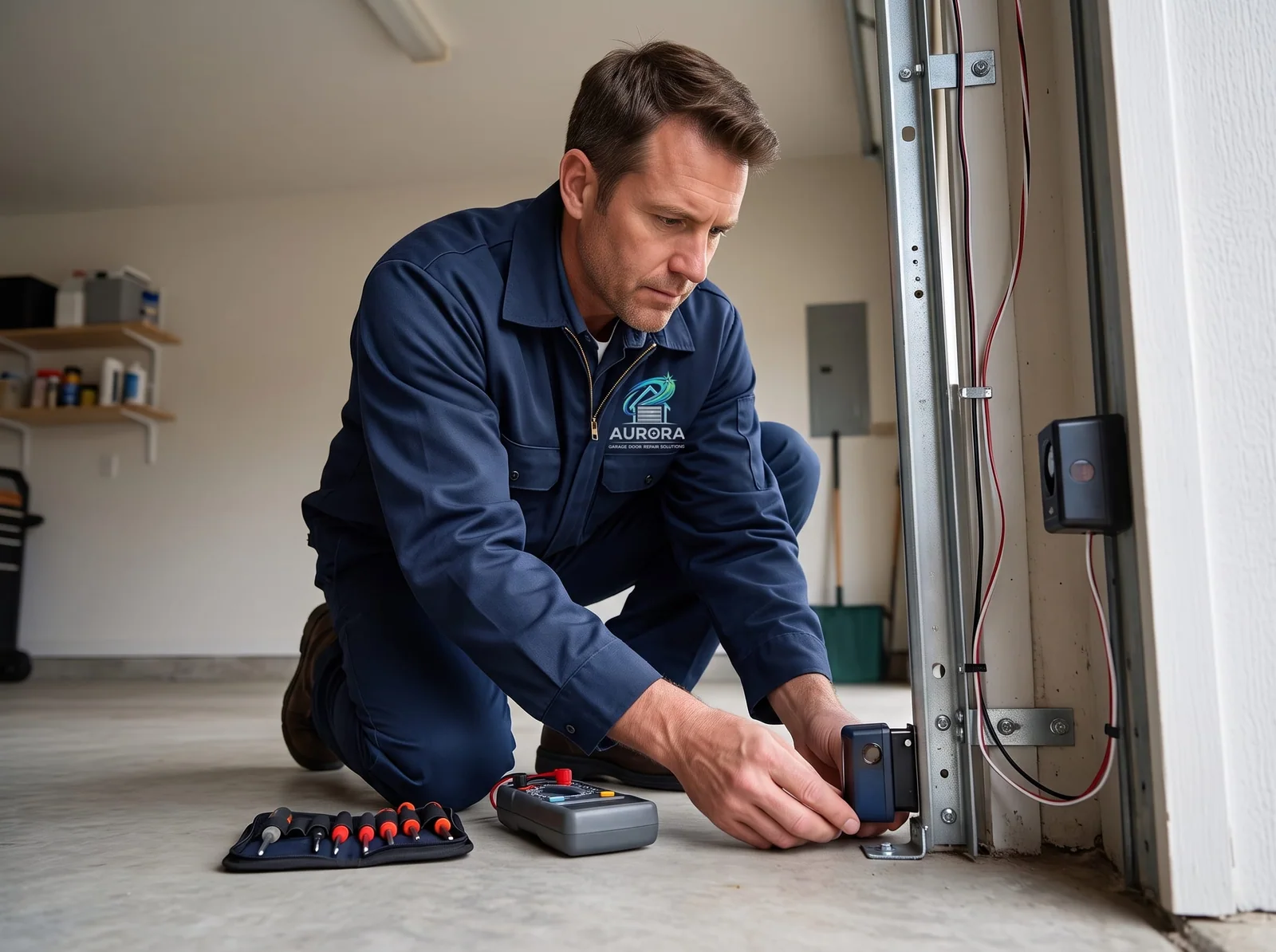
Some opener issues are safe for a homeowner to rule out. Others sit inside the motor housing or involve components that carry real risk if handled incorrectly, and those are where our technicians take over.
- Internal gear and motor issues. A stripped drive gear or a failing motor requires opening the housing, and the part often needs to be matched to the specific unit. Guesswork here tends to make the failure worse.
- Circuit board problems. Erratic behavior, random reversing with clean sensors, or a unit that won't power on at all can point to a failing logic board, which involves electrical diagnosis most homeowners aren't equipped to do safely.
- Anything involving the torsion spring or cable system near the opener rail. These store enough force to cause serious injury and should always be left to a trained technician.
If your troubleshooting doesn't fix it, that's the point to call rather than keep guessing.
Why Cold Weather Hits Aurora Openers Hard
Aurora's humid continental climate means openers work through a real seasonal swing, from summer highs near 84°F down to January mornings averaging in the mid-teens. Cold thickens the lubricant inside the gearbox and along a screw drive's rod, which makes the motor strain harder to move the same door it moved easily in July. That extra strain is what drives our winter increase in motor and gear complaints, and it's also why a unit already showing minor wear tends to fail once the cold really sets in rather than during a mild stretch. If your opener has been groaning or slowing down as temperatures dropped, that's worth addressing before it fails on the coldest morning of the year.
Why Aurora Homeowners Call Us for Opener Repair
Aurora Garage Door Repair Solutions has been repairing garage doors and openers in Aurora since 2009. Owner Ryan Delaney built the company on doing the diagnosis right rather than defaulting to a full opener replacement, and that mindset carries over from spring work into every opener call we take. If your unit can be repaired reliably, we'll tell you that; if it genuinely needs replacing, we'll tell you that too, with upfront, honest pricing before any work starts.
Our technicians are insured and background-checked, we offer same-day appointments where possible, and we back our opener repairs with workmanship-backed service. You're not getting a sales pitch for a new system when a repair will hold.
What to Expect When You Call
Phone diagnosis
Tell us the opener type and symptoms so we bring the likely parts and tools with us.
On-site inspection
We test the motor, gears, circuit board, sensors, and trolley engagement to isolate the actual failure.
Upfront quote
You get honest pricing and a clear explanation of the repair before we touch anything.
Repair or targeted replacement
We repair the failed component when that's the sound choice, or recommend replacement only when repair isn't cost-effective.
Safety and function test
We confirm sensor alignment, auto-reverse, and force settings are correct before we leave.
Garage Door Opener Repair in Aurora, IL FAQs
How much does garage door opener repair cost?
It depends on what's actually failed. A sensor realignment or a battery-related issue costs far less to fix than a motor or circuit board replacement. We provide a free, upfront quote after diagnosing the problem, before any work begins.
Can I fix my garage door opener myself?
Some things are safe to check yourself: sensor alignment and cleanliness, power to the unit, and remote batteries. Anything involving the motor housing, internal gears, circuit board, or nearby spring and cable hardware is safer left to a technician.
Why does my garage door reverse right after it starts closing?
The most common causes are misaligned or dirty safety sensors, an obstruction in the sensor beam, or force and travel-limit settings that have drifted out of adjustment. We check all three before touching anything else.
Why won't my garage door opener respond to the remote?
Weak or dead remote batteries are the most frequent cause. If fresh batteries don't fix it, the remote may have lost its programming sync with the opener, or the receiver inside the unit could be failing.
Is a grinding noise from my garage door opener serious?
It's worth addressing promptly. Grinding usually means a worn drive gear, a loose chain or belt, or a failing bearing inside the motor housing, and it tends to get worse rather than resolve on its own.
How long does garage door opener repair take?
Many opener repairs, like sensor adjustments or minor part replacements, are completed in a single visit. Motor or circuit board replacements can take longer depending on part availability, which we'll walk you through during the quote.
Do I need a new opener, or can mine be repaired?
Many failures, including sensor, gear, and remote issues, are repairable without replacing the whole unit. We only recommend full replacement when the repair cost doesn't make sense against the age and condition of the opener.
Need Garage Door Opener Repair in Aurora, IL?
Aurora Garage Door Repair Solutions is ready to help — call now for a free, upfront quote.