
Garage Door Safety Sensors: How They Work and Why You Should Never Bypass Them
Photo-eye sensors are the reason your garage door reverses instead of closing on something in its path. Here's how they work, why they fail, and why jumping the wires is never the answer.
What the Safety Sensors Actually Do
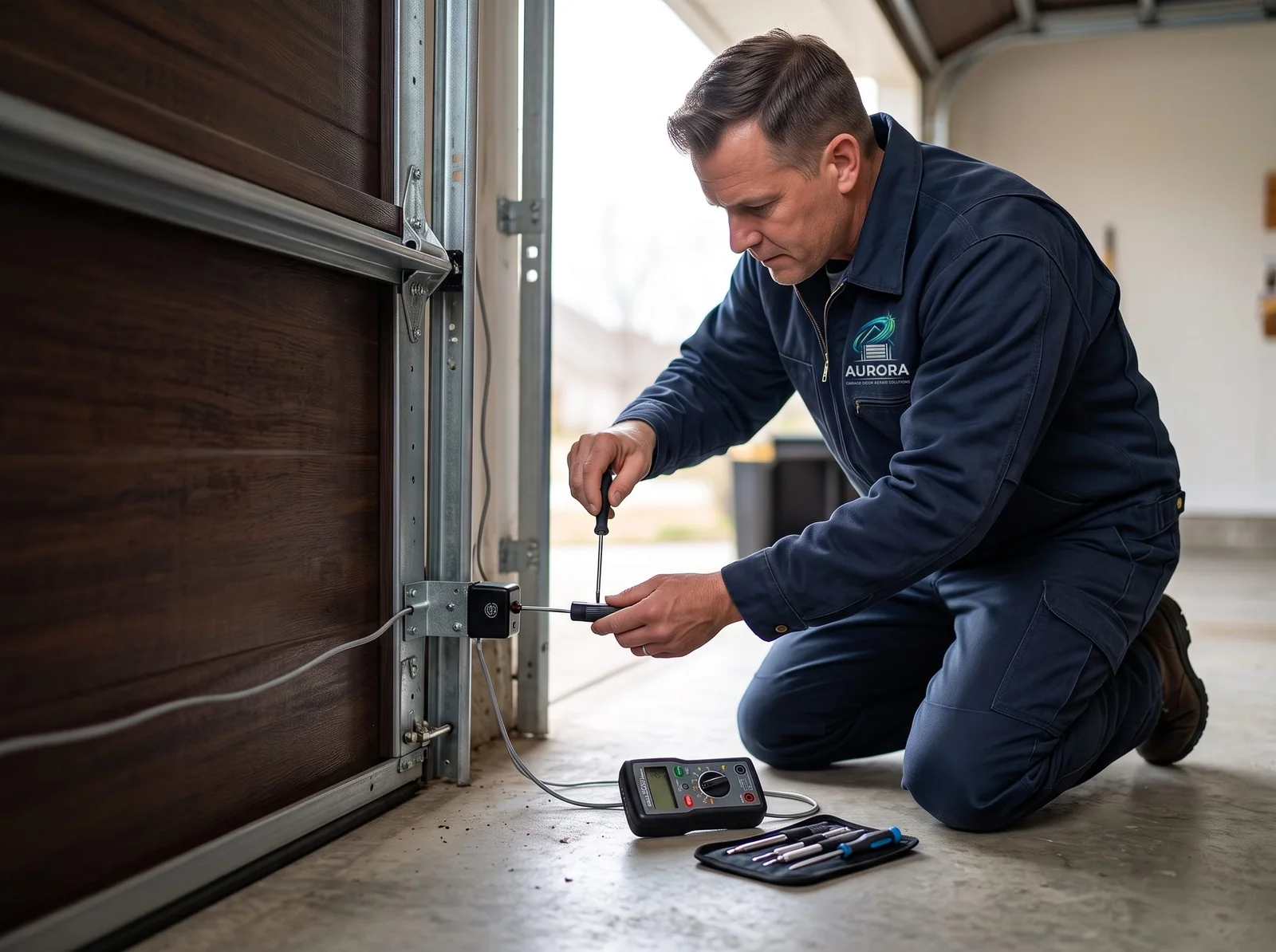
Look at the bottom of your garage door tracks, roughly four to six inches off the garage floor, and you'll find two small plastic boxes mounted on brackets facing each other across the opening. These are the photo-eye sensors, and they do one job: one unit shines a continuous infrared beam across the doorway, invisible to your eyes, and the other unit watches for that beam. As long as the receiving sensor sees an unbroken beam, the opener is free to close the door normally. The instant something crosses that beam and interrupts it, whether that's a bicycle tire, a pet, a toddler, or a stray garden hose, the receiving sensor reports the break to the opener's logic board, and the opener stops the door and reverses it back to the open position.
This happens in a fraction of a second, and it works whether the door is already moving down or is about to start. Most openers also refuse to begin closing at all if the beam is already broken when you press the button or use a remote, which is why a door that won't close but opens fine is very often a sensor problem rather than a motor or spring problem. Understanding this distinction matters because it's the difference between a five-minute fix and an unnecessary service call, or worse, an attempt to defeat a safety system that's doing exactly what it was designed to do.
Why Federal Law Requires Them
These sensors aren't a manufacturer convenience feature. Since 1993, federal law under the Consumer Product Safety Commission has required residential garage door openers sold in the United States to include an external entrapment protection device, and photo-eye sensors are by far the most common way manufacturers satisfy that requirement. If your home's opener was manufactured or installed after that point, it's supposed to have working sensors as a condition of being legal to sell. You can read the general background on residential door and opener safety requirements directly from the U.S. Consumer Product Safety Commission, which has tracked garage door related injuries and deaths for decades and pushed for the entrapment protection rule specifically because of how much force a garage door door exerts and how little time a person or animal has to react once it starts closing.
The rule exists because a moving garage door is heavy, usually well over a hundred pounds for a standard steel sectional door, and it closes with enough force to cause serious injury or worse if it comes down on a person, pet, or object that can't get out of the way in time. Before sensors and modern reversal mechanisms became standard, garage doors were involved in a meaningful number of preventable injuries every year, particularly involving young children who don't process the speed and weight of a closing door the way an adult does. The two-sensor beam system, combined with the mechanical force-sensing reversal built into the opener itself, is the layered defense that modern code and manufacturer design rely on. Neither one is optional, and neither one is there because someone thought it would be a nice extra.
How to Tell When a Sensor Is the Problem
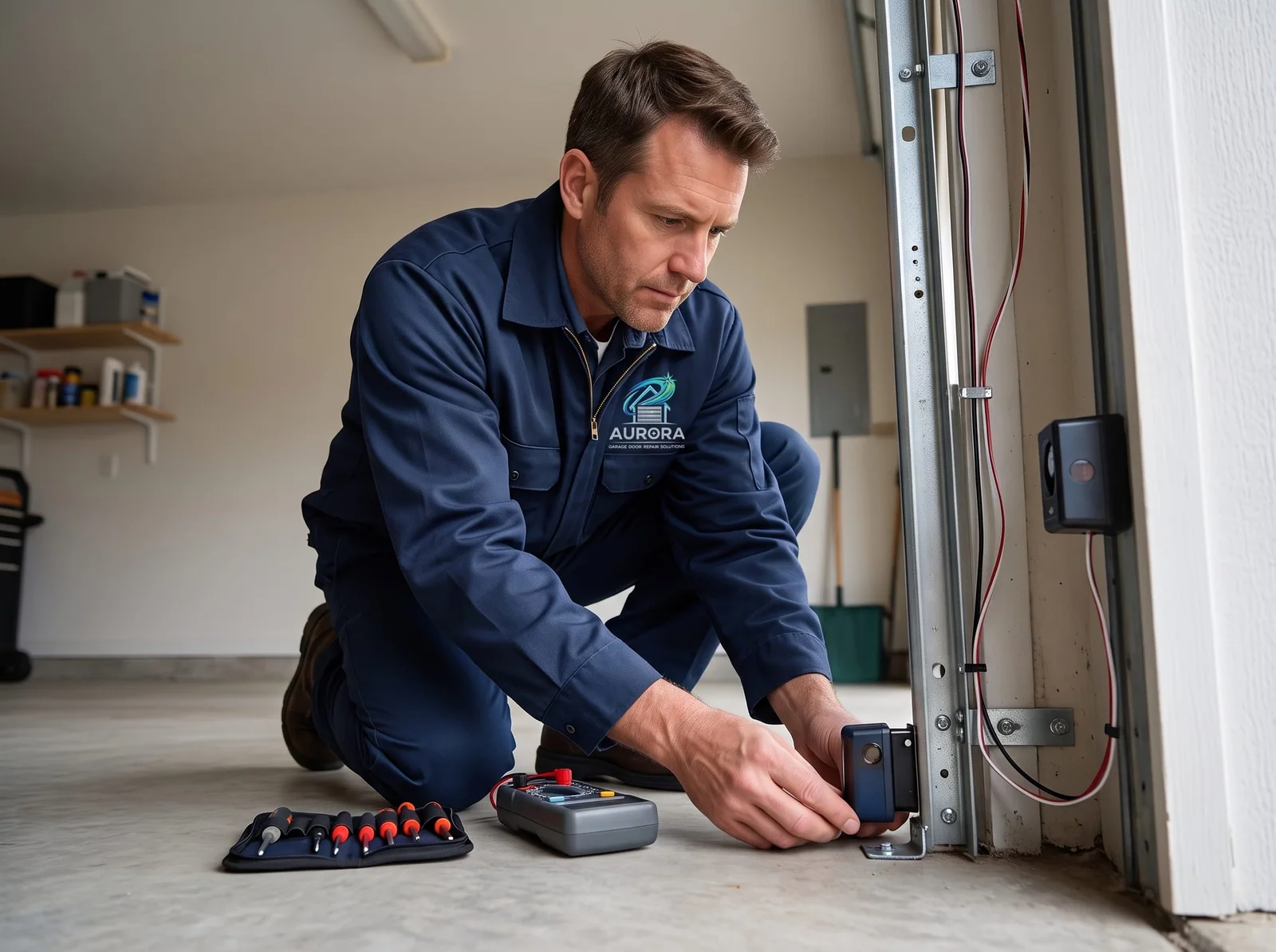
A handful of symptoms point almost directly at the sensors rather than the opener motor, the springs, or the track. If the door reverses immediately after touching the floor, or reverses partway down for no visible reason, or simply refuses to close at all while going up without any issue, check the sensors first. Most opener brands include a small LED light on each sensor unit. When the beam is aligned and unobstructed, both LEDs typically glow solid, though the exact color and pattern varies by brand and model, so it's worth checking your opener's manual or the label on the unit itself. A blinking or dark LED on either sensor is usually the clearest sign something is wrong with alignment, wiring, or the lens itself, before you ever touch a wrench.
It's also worth ruling out the obvious: something physically sitting in the beam's path. A tipped-over broom, a low storage bin, a dog bed, even a hanging extension cord can sit right at that four-to-six-inch height and block the beam without being obvious at a glance from inside the house. Walk the width of the door opening and look at floor level before assuming the sensors themselves have failed.
Misalignment: The Most Common Cause
By a wide margin, the most frequent cause of sensor trouble is misalignment, not a broken part. The two sensor units have to be aimed at each other with real precision. Because they're mounted low, near where cars, bikes, lawn equipment, and kids' toys pass by constantly, they get bumped far more often than most homeowners realize. A car bumper that clips a bracket while backing out, a rake leaned against the track, even a firm nudge while sweeping the garage floor can rotate a sensor a few degrees off axis. A few degrees is all it takes. The beam is narrow enough that a small shift in angle sends it past the receiving sensor entirely instead of into it, and the opener reads that as a permanently broken beam even though nothing is actually in the doorway.
Misalignment often shows up gradually rather than all at once. A sensor that's slightly off might still work on a still day but fail once a draft, a passing truck, or someone closing a nearby door causes enough vibration to shift it that last small amount. If your sensors have started acting up intermittently rather than consistently, a marginal alignment issue is a very likely explanation.
Dirty or Obstructed Lenses
Garage floors accumulate dust, drywall dust from projects, lawn clippings, road salt residue tracked in on tires during Illinois winters, and general grime, and all of it eventually settles on the small glass or plastic lens covering each sensor's eye. Because the sensors sit so close to the ground, they're more exposed to this buildup than almost anything else in the garage. A layer of dust or a cobweb spun across the lens can weaken the infrared beam enough that the receiving unit can't reliably detect it, especially if the sensors are already slightly out of alignment and the beam is marginal to begin with.
This is a slow, easy problem to overlook because the buildup happens gradually and a light film often isn't visible without getting down at floor level and looking closely. It's also one of the simplest problems to fix, which makes it worth checking before assuming a sensor has actually failed electronically.
Sunlight Glare: An Illinois Seasonal Problem
One cause that catches a lot of homeowners off guard is direct sunlight hitting the receiving sensor's lens at a low angle. Infrared sensors work by detecting the specific infrared wavelength emitted by the paired transmitter, but strong direct sunlight can wash out or overwhelm that signal, essentially blinding the receiver the same way a bright headlight blinds a driver at night. Because the sun's angle changes with the seasons, this problem tends to show up at specific times of day and specific times of year rather than constantly, which is exactly what makes it confusing to diagnose. A garage that faces east or west is especially prone to this during the lower sun angles of fall and winter mornings and evenings here in the Aurora area, when the sun sits closer to the horizon for a longer stretch of the day than it does in summer.
If your door reverses at roughly the same time of day, especially near sunrise or sunset, and works fine the rest of the day, sun glare on the sensor is worth checking before anything else. A simple, inexpensive fix is a small sun shield or hood over the affected sensor, sold by most opener manufacturers, or even a piece of cut PVC pipe or a small overhang built to block direct light while leaving the beam path clear. Reangling the sensor slightly downward, within the limits of still facing its pair, can also help without materially affecting how low the beam sits.
Loose or Damaged Wiring
Each sensor is wired back to the opener's control board with thin low-voltage wire, and that wire runs exposed along the track or wall in most installations, which means it's vulnerable to being snagged, pinched, chewed by rodents, corroded at the connection points, or simply worked loose over years of the door's vibration during normal operation. A loose wire nut, a corroded terminal, or a wire that's been nicked and is intermittently shorting will produce exactly the same symptoms as a misaligned or dirty sensor: a door that won't close, or one that closes and reverses unpredictably.
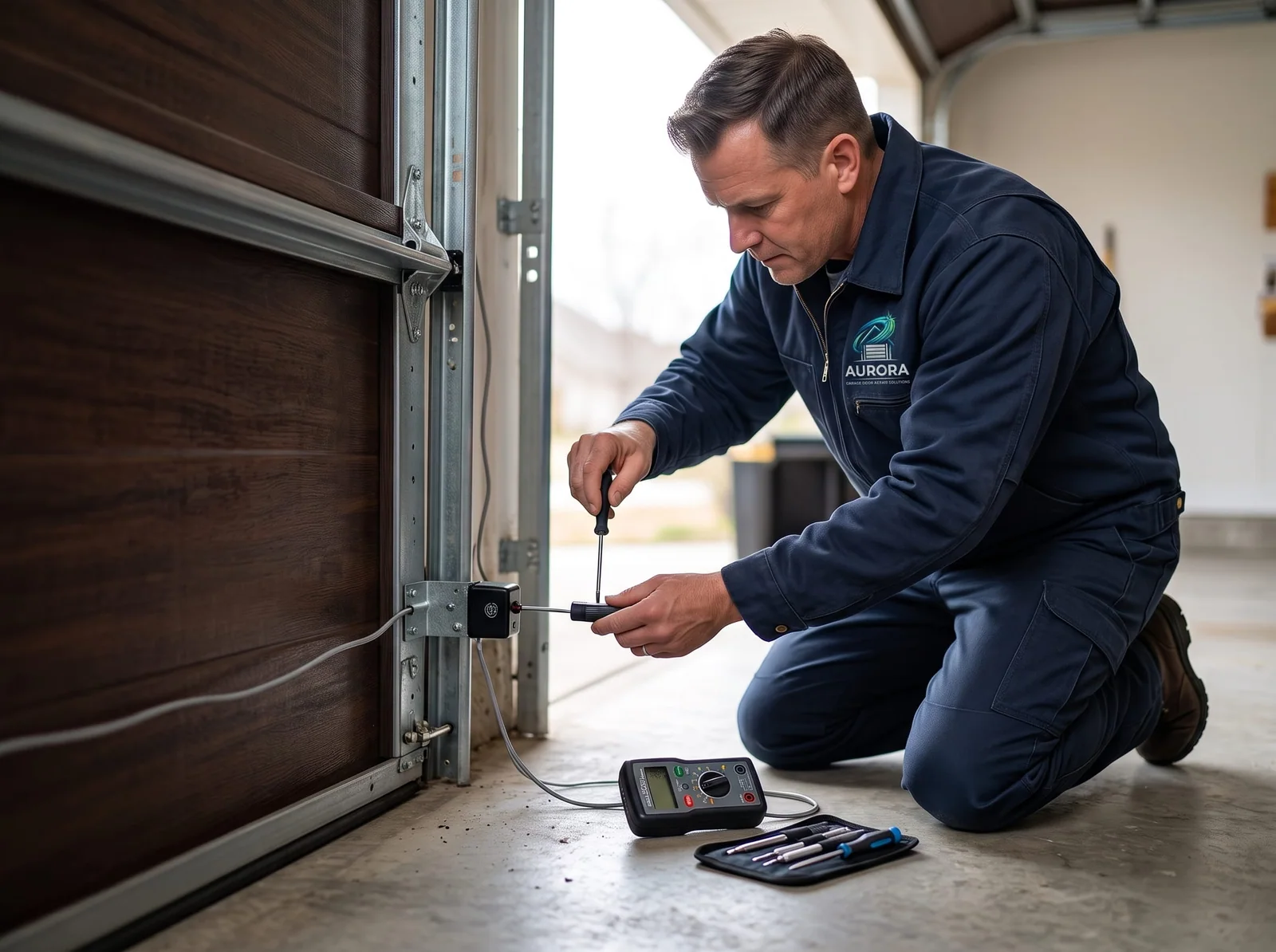
Wiring problems tend to be less common than alignment or dirt issues, but they're worth ruling out if you've already cleaned and realigned both sensors and the problem persists. A visual check along the wire's full length, looking for any spot where insulation is damaged, a connection has pulled loose, or the wire has been pinched under a bracket, will usually reveal the issue. If the wiring looks intact and the sensors are clean and aligned but the problem continues, that's the point where calling a technician makes more sense than continuing to troubleshoot, since it may indicate a failing sensor unit or a problem at the opener's control board itself.
How to Safely Realign and Clean Your Sensors
Most alignment and cleaning fixes take less than fifteen minutes and don't require any tools beyond a soft cloth and, in some cases, a screwdriver to loosen the wing nut or bracket screw holding each sensor in place. Here's a straightforward approach:
- Disconnect the opener from power at the outlet or breaker before touching any wiring, even low-voltage wiring, as a general safety habit.
- Wipe each sensor's lens gently with a soft, dry or slightly damp cloth. Avoid glass cleaner or solvents, which can cloud plastic lenses over time.
- Check that both sensor brackets are tight against the track and haven't been bent or knocked loose. Tighten the mounting screw or wing nut by hand, snug but not overtightened.
- Loosen the bracket just enough to allow small adjustments, then aim each sensor at its pair by sighting along the top of the unit, and watch the LED indicator as you make small adjustments until it shows a steady, solid signal rather than blinking.
- Once both LEDs indicate a good connection, tighten the brackets fully and restore power, then test the door through a full open and close cycle, and test the safety reversal itself by placing a cardboard box or similar object in the beam's path while the door is closing to confirm it reverses.
If you've checked alignment, cleaned both lenses, ruled out sun glare, and inspected the visible wiring and the door still won't close reliably, that's a reasonable point to call a technician rather than keep guessing, since the remaining possibilities usually involve either a failed sensor unit or an issue at the opener's logic board that needs proper diagnostic equipment.
Why Bypassing or Jumping the Sensors Is Dangerous
When a door won't close and someone is in a hurry, whether it's late at night, in bad weather, or just after a frustrating string of troubleshooting attempts, it's not unusual for people to look up how to disable the sensors entirely, sometimes by unplugging them and jumping or splicing the two wire leads together at the opener terminal to trick the control board into thinking the beam is always intact. It works, in the narrow sense that the door will close again. It also means the door has zero ability to detect a person, pet, or object in its path for the rest of the time it stays that way, and most people who do this intend it as a temporary fix but leave it in place for months because the door works and they move on to other things.
This is genuinely one of the more dangerous shortcuts a homeowner can take with a garage door. The reversal sensors exist specifically for the scenario where someone doesn't have time to react, like a young child running back for a dropped toy or a pet darting through the doorway just as the door starts down, and a jumped sensor removes exactly that protection at exactly the moment it would matter. It also does nothing to fix the underlying problem, which is very often a simple, cheap alignment or cleaning issue as covered above. Bypassing the sensor trades a fifteen-minute fix for an open-ended safety gap, and it's not something any responsible technician will do or recommend, no matter how minor the underlying cause turns out to be. If your sensors keep failing even after cleaning, realigning, and checking the wiring, the right move is diagnosing why, not removing the safeguard.

Ryan Delaney
Owner and lead technician at Aurora Garage Door Repair Solutions, serving Aurora, IL since 2009.
FAQs
Is it dangerous to disable my garage door's safety sensors?
Yes. The sensors are the primary way your opener detects a person, pet, or object in the door's path before it closes on them. Disabling or jumping them removes that protection entirely, and the door has no way to know something is underneath it until it makes contact. It's not a safe workaround for any length of time, even temporarily.
Why does my garage door only fail to close at certain times of day?
This pattern almost always points to sunlight interference. Direct sun hitting the receiving sensor's lens at a low angle, common at sunrise and sunset during Illinois fall and winter, can overwhelm the infrared beam. Shielding the sensor from direct light or slightly adjusting its angle usually resolves it.
Can I clean or realign the sensors myself, or do I need a technician?
Cleaning the lenses and realigning the sensors is safe and reasonable for most homeowners to attempt, and it resolves the majority of sensor issues. If the door still won't close reliably after cleaning, aligning, checking for sun glare, and inspecting the visible wiring, that's a good point to call a technician, since the remaining causes usually require testing the sensor unit or the opener's control board directly.
How do I know if the problem is the sensors and not the springs or opener motor?
If the door opens normally but won't close, or reverses partway down without hitting anything visible, the sensors are the most likely cause. Spring and motor problems typically show up as difficulty on both opening and closing, unusual noise, or the door feeling heavy or uneven, which is different from a clean reversal that only affects closing.
How often should I check or clean my garage door sensors?
A quick visual check and wipe-down every few months is reasonable, and it's worth adding to a broader seasonal maintenance routine. Checking after any known bump, like backing a vehicle too close to the track or leaning equipment against it, is also a good habit, since that's when misalignment most often happens.
My sensors look aligned and clean but the door still won't close. What's next?
At that point the issue is likely wiring, a failing sensor unit, or a problem at the opener's control board, all of which are harder to diagnose without testing equipment. This is a reasonable time to call a technician rather than attempt further fixes, and definitely not a reason to bypass the sensors as a workaround.
Have a Garage Door Problem Right Now?
Skip the guesswork — call Aurora Garage Door Repair Solutions for a fast, honest diagnosis.